Climate Action Museum: Chicago’s answer to ‘what can I actually do?’
Published on Apr. 3, 2025 by Joseph Miscimarra
The Climate Action Museum opened in 2023, and it’s already become a vibrant hub for sustainability-minded Chicagoans.
As a proud Chicagoan, one of my favorite vantage points is the Jackson Boulevard bridge over the Chicago River. It’s a perfect spot to appreciate the physical manifestations of our city’s notable characteristics: our social diversity is embodied by the hordes of commuters who emerge from Union Station each morning, arriving from places both near and far. Above them, the colossal Willis Tower commands respect for Chicago’s architectural ambition. Below, the direction of the river current itself serves as a testament to the unstoppable determination of our early 20th century laborers.
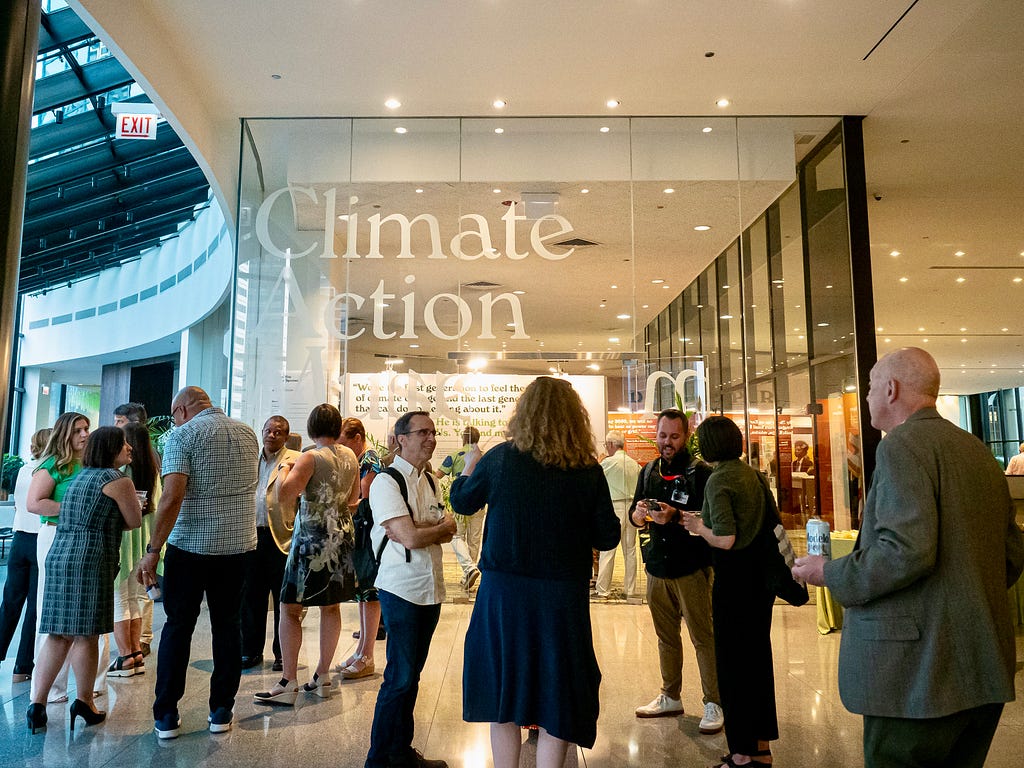
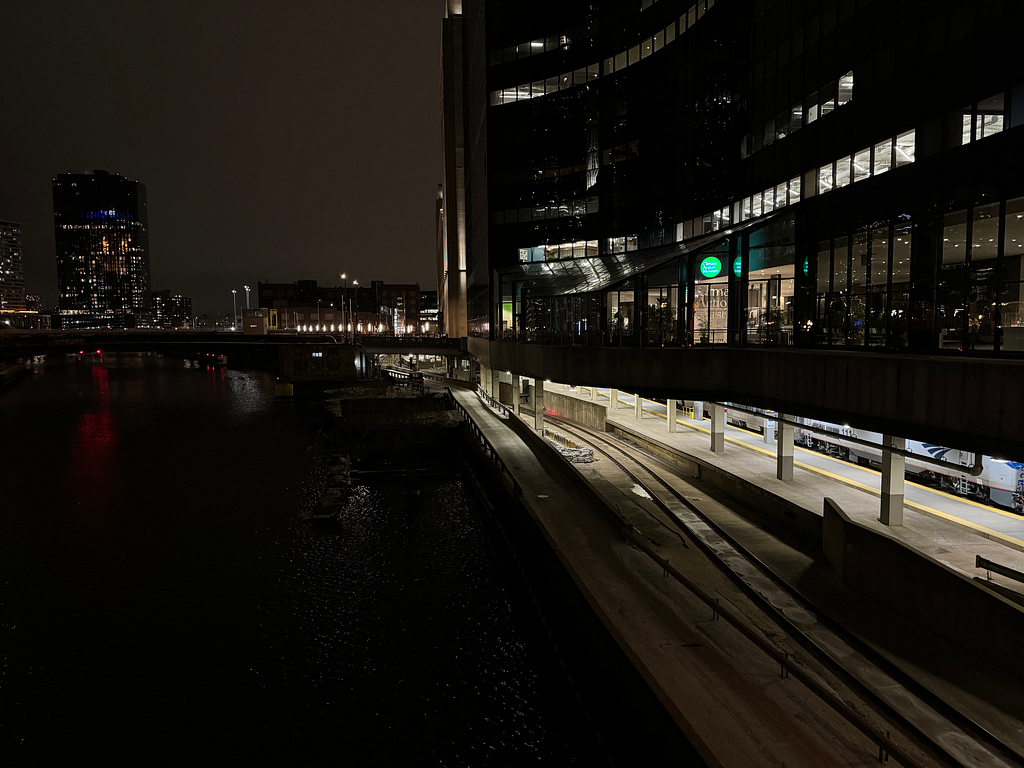
But for me, there’s more to it than just civic pride. I’m a climate conscious person, and I view everything through a sustainability lens. From this bridge, Chicago’s climate excellence is in plain sight. Looking east, I can watch thousands of people roll by on CTA trains powered by electrons from our state’s low-carbon nuclear reactors. To the south, a spaceship-like structure houses a giant ice battery that quietly and cleanly cools down dozens of the Loop’s offices as part of the continent’s largest district cooling system. And behind the windows of a building near the western end of the bridge, a green sign displays three words: “Climate Action Museum”.
If you walk down Jackson and through the doors of 300 S Riverside, you’ll find yourself in a panoramic atrium, with the Climate Action Museum ahead of you. The museum is free to visit, and it’s a must-see.
When I first visited the Climate Action Museum shortly after it opened in the summer of 2023, I was surprised at the clarity of its content. It doesn’t waste space on the climate “debate” (i.e., whether or not climate change is real and bad), and gets right down to business: climate change is here, so here’s how we fight it.
Perhaps more importantly, the museum is honest about solutions. It doesn’t boil down climate action to merely recycling or taking shorter showers. (These aren’t bad ideas, but they aren’t by themselves sufficient to address climate change.) Instead, it teaches visitors about real-world solutions relevant to normal people. It also offers resources to help visitors get things done.
For example, some sections encourage homeowners to use specific utility rebates that are available to cover costs of new efficient appliances. Or for renters, the museum promotes ElectrifyChicago.net as a tool they can use to compare the energy use intensities of large buildings that they might consider moving into.
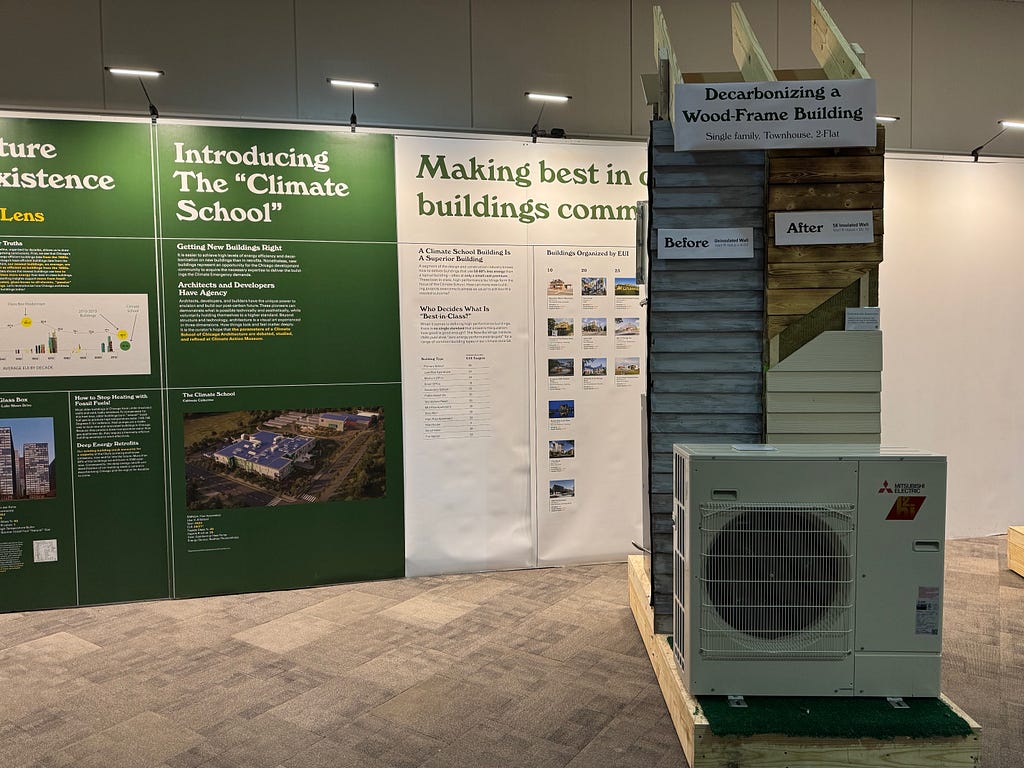
Since the museum is a spinoff of a repurposed Chicago Architecture Center exhibit, there is a strong focus on building emissions. This is obvious if you step foot inside and see the huge cross sections of walls from different eras with various types of insulation and window panes. However, this focus is justified by the local context; Chicago’s buildings are our biggest source of greenhouse gas emissions, whereas transportation is the dominant sector in most other American cities. But the museum panels acknowledge the links between all sectors — buildings, transportation, industry, electricity, land use, and even food.
In the back of the museum, visitors will find themselves in the “Do Your Part” section, which features specific calls to action directed at various subsets of visitors. I appreciate that this section isn’t afraid to acknowledge inconvenient truths and take reasoned stances on controversial subjects. One panel asks the general public to fly fewer miles and change home habits by doing additional errands by bike, walking, and transit. Another urges environmentalists to reconsider their opposition to nuclear power. Legislators, mayors, and village trustees are also mentioned: it’s their responsibility to allow denser infill housing that uses less energy.
Chicago Cityscape readers might find it refreshing that one panel implores city council members to re-legalize multifamily apartments in Chicago. The interplay between zoning and greenhouse gas emissions is still largely neglected by the broader environmental community, and the museum aspires to change that. Climate advocates would be wise to learn from the sections that recommend urban infill and YIMBY housing policies as climate solutions.
I could dive deeper into the exhibit content, but instead I’ll encourage you to see it in person. The museum is worth exploring on your own time (again, it’s free!) and I’ll add that they regularly host climate-related events. Some of the fun ones I’ve attended include a panel discussion from attendees of the COP28 UN climate meeting in Dubai and a debate between a preservationist vs. a passive house architect. (Watch other panels we’ve held.)
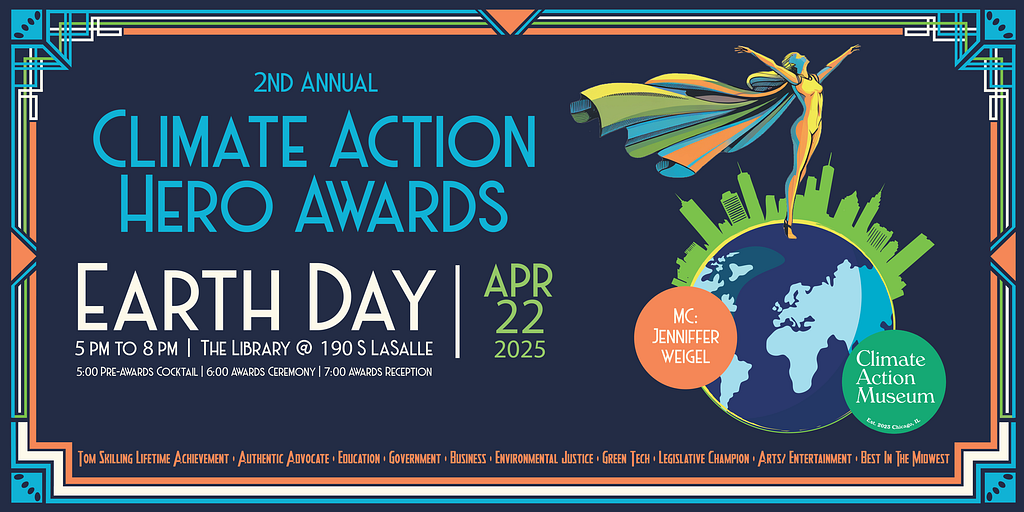
There is also one big event coming up: the second annual Climate Action Hero award ceremony, which will take place on Earth Day (Tuesday, April 22). The museum board has done a great job recognizing leaders in a wide variety of impactful categories, including environmental justice, art, tech, and government. If you want to spend Earth Day surrounded by inspiring climate changemakers, then you can buy a ticket today! All proceeds will support the museum’s operations and growth.
The Climate Action Museum has already shown incredible promise, but it’s also less than two years old. There is plenty of work ahead. The museum doesn’t have full-time staff yet. There’s also a need to engage with more community groups. But the museum has all of the ingredients to become a hub for sustainability in Chicago. It’s centrally located, connected with local leaders, and focused on the future.
Next time you’re downtown, perhaps in the vicinity of Union Station or the Jackson Boulevard bridge, walk over to the Climate Action Museum. It’s worth your attention, and it’s just getting started.
-Joseph Miscimarra, guest writer and member of the Climate Action Museum’s inaugural Emerging Leaders Advisory Board
Climate Action Museum: Chicago’s answer to ‘what can I actually do?’ was originally published in Chicago Cityscape’s Blog on Medium, where people are continuing the conversation by highlighting and responding to this story.
Tags
Click a tag to find more posts.
- commentary (3)
Other posts by Joseph Miscimarra full archive
April 2025
- Climate Action Museum: Chicago’s answer to ‘what can I actually do?’
📄 you're reading this one