Find large developable sites, even if they’re subdivided into many parcels
Member only content
Published on Feb. 2, 2026 by Steven Vance
Updated on Feb. 24, 2026
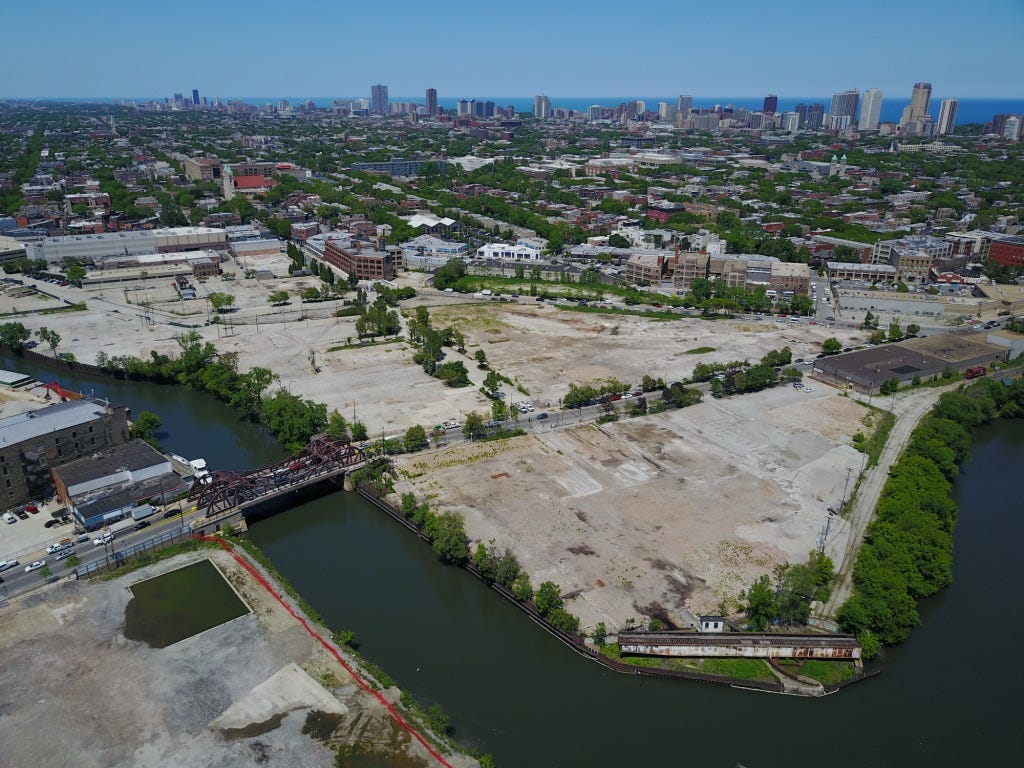
With so many sites in Chicago that are divided into dozens of parcels it's typically been difficult to use our existing Property Finder filters to locate them. To solve this problem we created a powerful filter that identifies large developable sites by grouping adjacent parcels owned by the same taxpayer.
The Parcel assemblages filter in Property Finder automatically identifies clusters of adjacent parcels that share the same taxpayer name and mailing address. Choose from three size tiers to match the scale of your project:
- Small — assemblages between ½ acre and less than 1 acre
- Medium — assemblages between 1 acre and less than 2 acres
- Large — assemblages of 2 acres or more
How it works
Our algorithm analyzes nearly 2 million parcels in Chicago to find:
- Adjacent parcels owned by the same taxpayer
- Clusters totaling at least ½ acre (21,780 square feet)
- Developable property classes only (vacant land, residential, commercial, industrial)
- Excluded: institutional owners like railroads, utilities, government agencies, and airports. We also exclude parcels primarily zoned for parks, open space, or transportation.
What you'll see
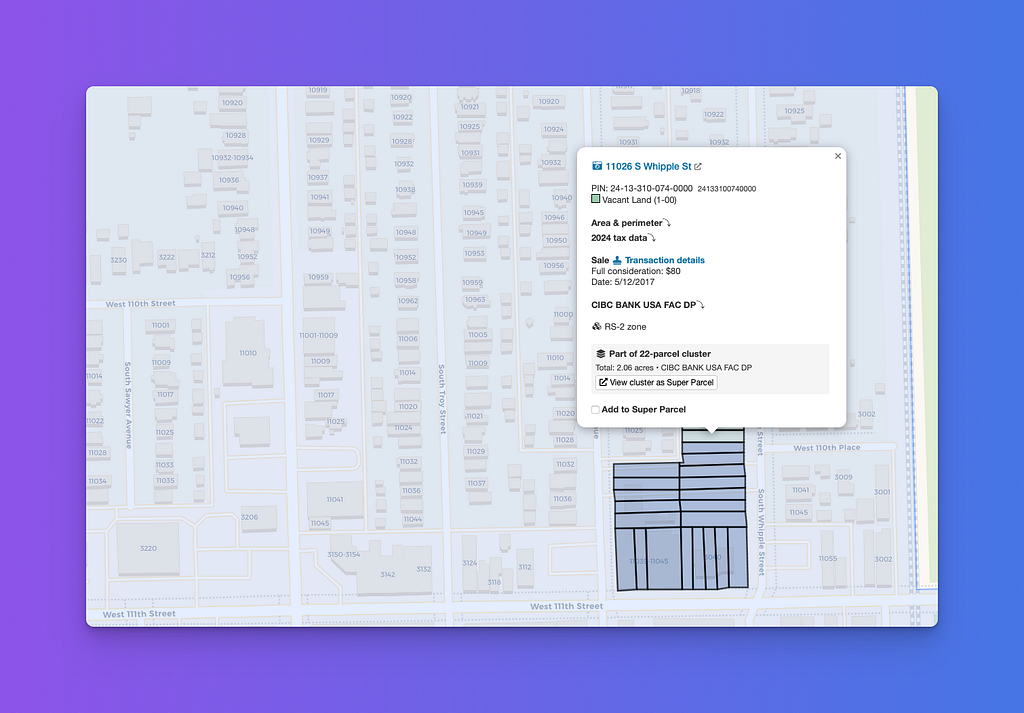
When you select a Parcel assemblages filter in any Place Report, Property Finder shows all parcels that are part of a qualifying cluster. Then, select any parcel on the map to see:
- Total cluster acreage
- Number of parcels in the cluster
- Taxpayer name
- A link to view the entire cluster as a "Super Parcel" (this may not work if the cluster has more than 15 parcels, a limitation we are working on improving)
The Super Parcel view combines all parcels in the cluster into a single property report, making it easy to analyze the full development potential. You can virtually upzone the property to determine how many homes and dwelling units would be allowed if City Council granted a real upzone.
Try it now
Open any Place Report and look for the Parcel assemblages options under Special filters in Property Finder. Pick the size tier that matches the scale of development you're looking for.
Since this is continuously being improved, we appreciate your feedback.
Find large developable sites, even if they're subdivided into many parcels was originally published in Chicago Cityscape's Blog on Medium, where people are continuing the...
Tags
Click a tag to find more posts.
Other posts by Steven Vance full archive
March 2026
February 2026
- Find large developable sites, even if they’re subdivided into many parcels
📄 you're reading this one