How can this energy efficiency standard become as common in Chicago as the kind of house it’s being applied to?
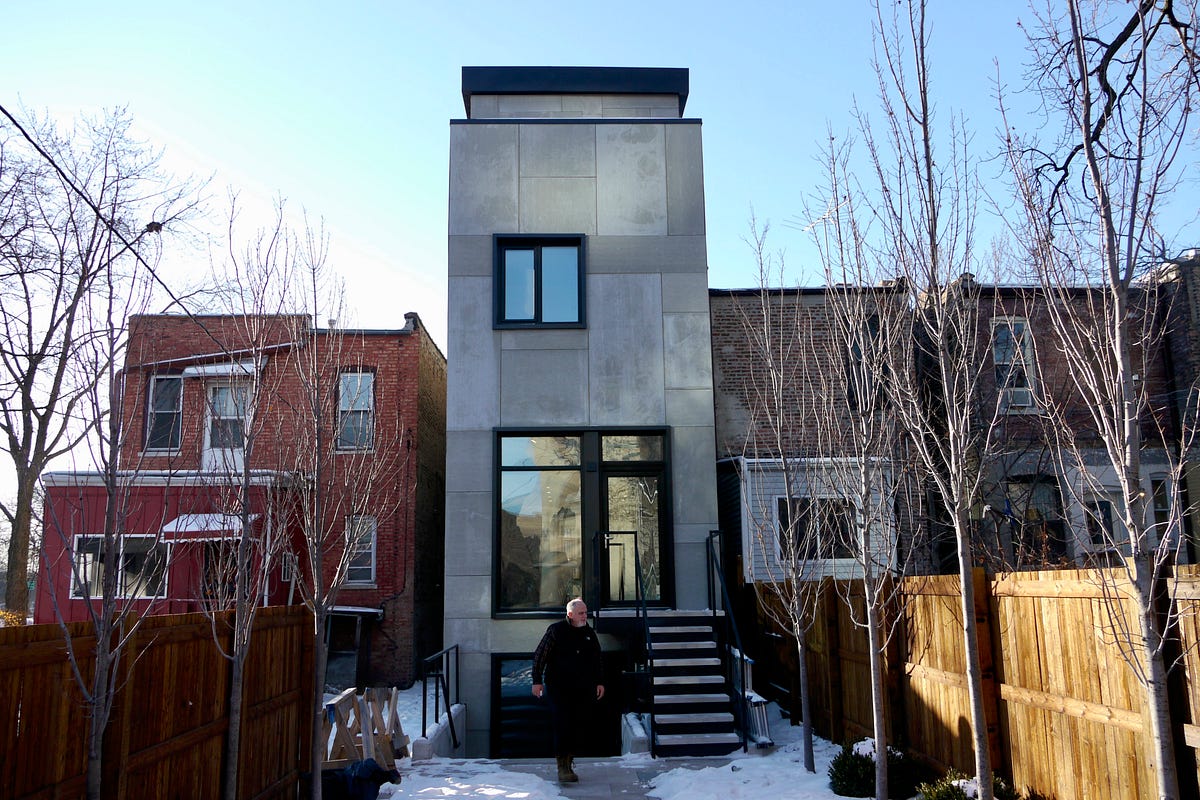
Earlier this month I toured what will most likely become the first Passivhaus Institut-certified building in Illinois. The extremely airtight, single-family house is for sale in Hyde Park, across from the University of Chicago dormitory designed by Studio Gang.
Scroll down for the weekly neighborhood news

Being a “passive house” means it will use less energy per household than all of you reading this article–unless you also live in a passive house. Energy efficient houses don’t really appear like they’re going to be extremely energy efficient, and since the one at 5485 S. Ellis Ave. is a retrofit of a 134-year-old row house, it won’t look that way at all.
Mike Conners bought the house in 2015 and has been renovating it since then. He’s renovated other houses in Kenwood and Hyde Park, after spending most of his career as a financial investor.
Passivhaus Institut is a German organization that educates contractors and property developers about the passive house standard they’ve developed, and trains companies on how to measure and certify buildings. Conners said that PHI “suggests a ninety percent reduction in build energy demand should be expected all else being equal versus existing” use.
Continue reading about the passive house…
Neighborhood news
- Map: How much did house prices change from 2016 to 2017 in your community area? The result in Avondale aren’t surprising but the result in East Garfield Park is. Woodlawn had huge jump. (Crain’s)
- Might existing residents’ desire for less curbside parking competition with new residents prevent an apartment development (or reduce its unit count) in Old Town? (Curbed)
- “Carol Ross Barney’s long career [as an architect] in Chicago…is almost entirely made up of public works. She thrives on solving knotty, seemingly prosaic infrastructural problems, with a special emphasis on transit.” (Metropolis)

- Residents are forming their own mental health care clinics after Mayor Emanuel closed them (Belt Mag)
- Two weeks ago, Whole Foods put their new distribution center in Pullman into service (you can find it on the map here) (WCIU)
- Also in Pullman: using affirmative marketing and “asset-based community development” as strategies to talk about what’s already good in the neighborhood to improve its prosperity (Sun-Times)