Part of the tax code changes enacted in December 2017
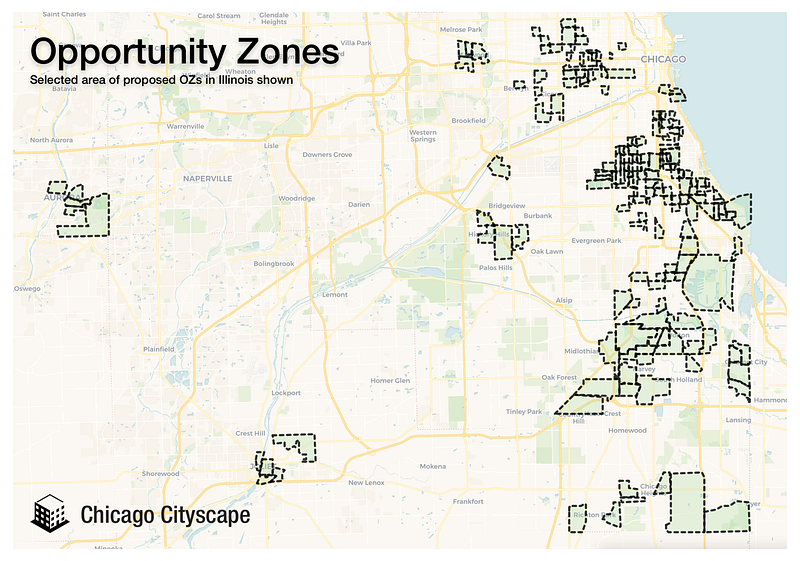
An Opportunity Zone is a low-income area that’s been designated as a place where people can invest their capital gains for 10 years and potentially pay less in taxes than if the capital gains were realized immediately. Each state that wanted to participate had to submit a list of Census tracts — which meet similar criteria as the Low Income Housing Tax Credit (LIHTC) program — earlier this month to the U.S. Treasury.
Chicago Cityscape Pro members and anyone who purchased a single Address Snapshot report* will be able to see if an Illinois address, or a Cook County PIN, is in a proposed Opportunity Zone.
Look for the “financial incentives” section in the Address Snapshot report — look up an address here.

The City of Chicago submitted 133 Census tracts, which the State of Illinois combined with 194 Census tracts from across the suburbs and downstate.
After the Census tracts are certified, investors will be able to set up privately-managed Opportunity Funds which would own property in the zones. A minimum of 90 percent of the assets would have to be qualifying properties in Opportunity Zones. Capital gains can be reinvested in these funds, which would defer the capital gains tax for 10 years. Then, there are no taxes on the appreciation of the capital gains in the Opportunity Fund if the capital gains are held there for 10 years.
A white paper from Economic Innovation Group (EIG) illustrates the additional income earned because of investing in a Qualified Opportunity Fund. Property owners and institutional investors interested in setting up or investing in an Opportunity Fund should read this interview on Bisnow.
*You can now obtain full, Pro-level access to any Address Snapshot or Company Profile on Chicago Cityscape by making a one-time purchase. It’s quick, easy, and affordable at $7.99 per report.