This architecture firm is doing the most ADU projects right now
Published on Nov. 17, 2021 by Steven Vance
Updated on Nov. 19, 2021
Last month I talked to Kaya Ramic and Virginia Chiu, founder and director of operations, respectively, at BLDG PROJ. The architecture firm is notable to me for being associated with the most accessory dwelling unit pre-approval applications (or “applications of intent”, as I sometimes call them). One of their clients was also the first to receive an ADU building permit, for a new basement unit, on September 1, 2021. Since then they’ve obtained a second permit for a basement unit.
BLDG PROJ is a successor to IR Design Firm, which was founded by Kaya’s father 22 years ago who has since passed away. Kaya said her company designs “mainly single-family houses, porches, garages, and sometimes projects with up to 20-80 units”. But, she said, “we like to work on basements, and coach houses.”

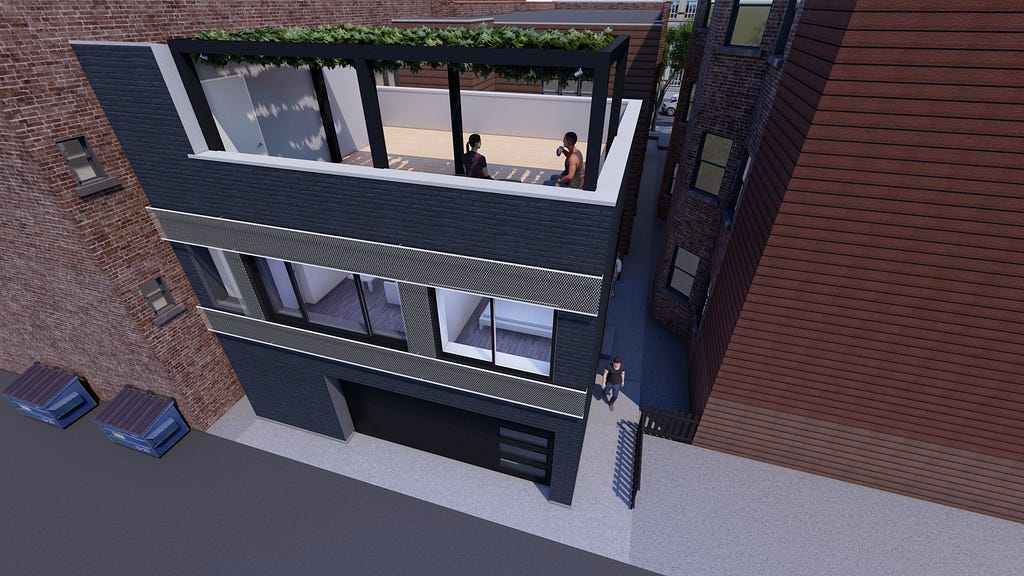
The designers got to be part of so many proposed ADU projects — 13 when I counted last night — by staying aware of the ADU ordinance’s adoption in December and subsequent start date in May. Virginia said, “I’ve been following the ADU ordinance…and we had a list of properties of our existing clients that would be eligible.”
Chicago Cityscape makes it easy for anyone to (1) determine if their property is in an ADU pilot area, and (2) find eligible properties in bulk for marketing efforts using Property Finder. Request a demo today.
Our exclusive resources include a map of the five pilot areas and an ADU Service Provider Directory.
She added, “I knew [the ordinance] was on the backburner last year, not knowing when it would finally be adopted”. But the company started working with clients on designing ADU projects in 2020, months before the ordinance was adopted.
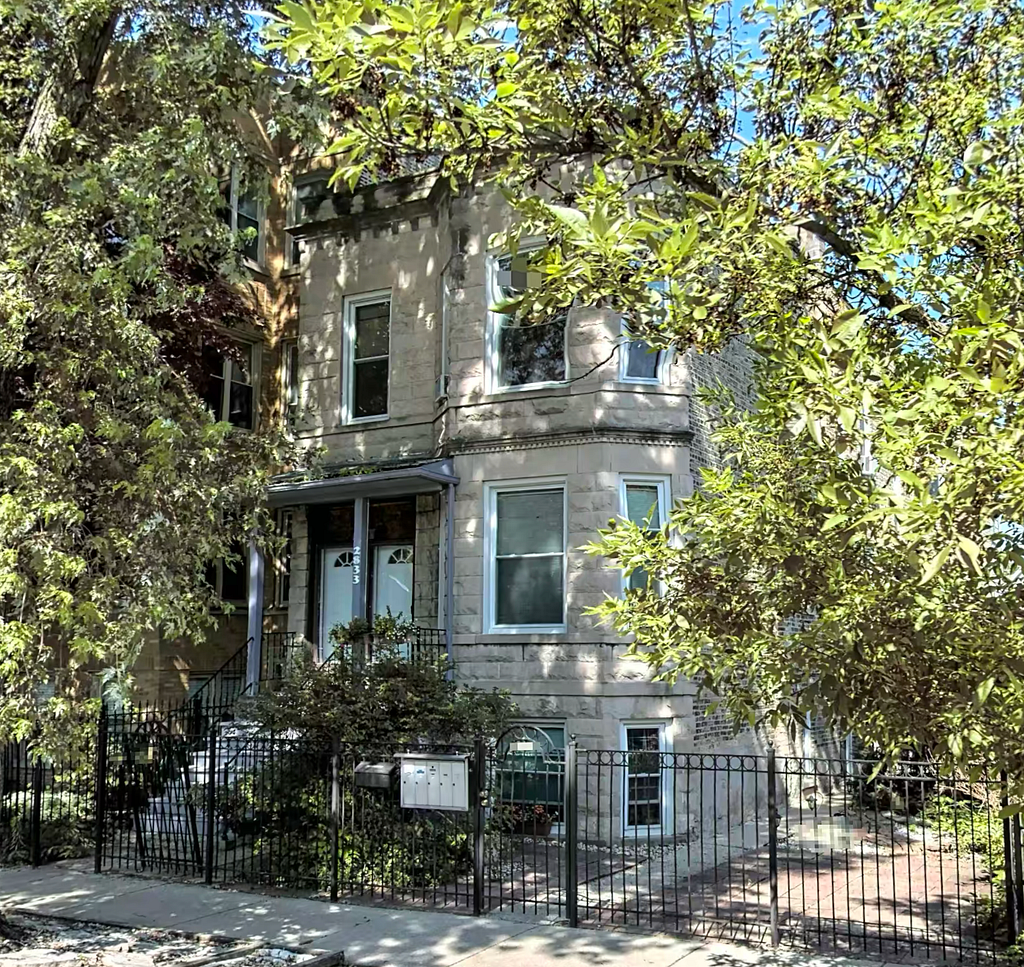
In fact, the first ADU permit, for a five-unit house in Avondale, was permitted as a whole-house renovation project in January this year without the basement unit — but still designed with the future dwelling in mind.
(According to the permit descriptions, the house already has a basement unit. For inquiring minds, the house appears quite large — it is longer than most, has no yard between it and the garage, and the lot is 12.5' wider than the standard 25' wide lot.)
Then, in September this year, BLDG PROJ obtained a revision permit to expand the project scope and include the second basement unit.
Virginia said she sent out 35 to 40 proposals for ADU projects to existing clients before May 1, 2021, when the Chicago Department of Buildings started accepting permit applications. Plus, she said, “I think we received one or two walk-ins, since we got on the Cityscape directory.”
Virginia added that she thinks the pre-approval application, which is administered by the Chicago Department of Housing, has slowed them down and delayed their submitting of permit applications to DOB. “Sometimes [the pre-approval email] comes quickly, within two days, and sometimes after I’ve uploaded the [required neighbor notification] docs, I’m still waiting for the email, which is the ‘golden ticket’.”
When it comes to fees, Kaya said that designing plans for an ADU for existing clients will save them a bit of money since the firm already has extant drawings.
If we already have drawings of that building, and we’re adding a basement unit, the design fee would be $3,800 to $7,800 depending on the size of the building (the more units, because we have to look at the whole picture, with water and electrical, and often update that, and improve the rest of the building, too, so they have the most efficient building for the next 20 to 30 years, so we try to push them that route.)
Fees for backyard houses? “Start to finish design, with two layout options, without permit fees, $8,800 to $12,800”, Kaya said.
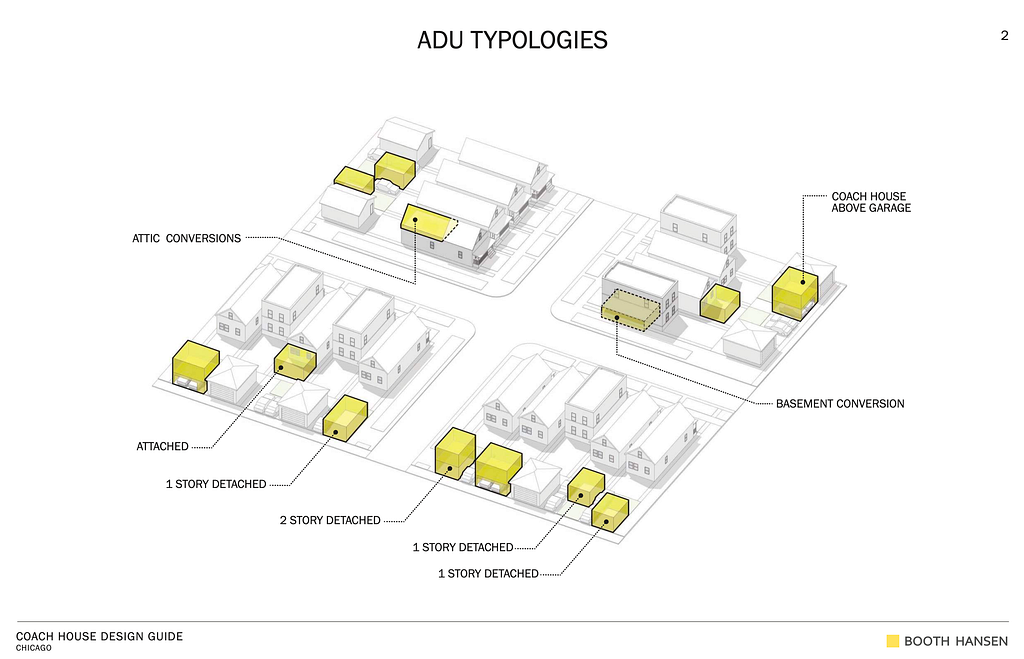
As of our interview, the only ADU typologies that BLDG PROJ was working on were basement units and coach houses. Other typologies that are allowed by Chicago’s ADU ordinance include attic units, first-floor commercial unit conversions (in R zoning districts), and ground-level backyard houses. The image below, by architects at Booth Hansen, shows the myriad typologies.
Who’s asking for ADUs
It’s mostly real estate professionals. Kaya said that of all their proposals, about 70 percent are for properties owned by developers and owner-occupant real estate agents. The balance is homeowners.
“Developers are always looking for what’s happening around changes to zoning and building code, and related news.”, Kaya said. “Homeowners, they aren’t constantly looking for things to do with their houses. They’re very visual and don’t understand 2D drawings as much as contractors. We include the 3D renderings for free to help the homeowner.”
Virginia said it’s tough to find or market to homeowners, adding, “I think we should include more alderpersons, and alderpersons should be marketing more. The most active one has been Alderperson Martin, who’s done webinars*. I think getting the alderperson on board would help get more homeowners involved.”
If you are a homeowner approaching the architects at BLDG PROJ, Kaya recommended, “We ask that people come with an open mind, but to know what typology you would like to add, the kind of finishes you’d like, and a potential contractor.”
Barriers
Kaya said ground level housing “only works on extra wide lots”. I’ve pointed the regulatory barrier to accessible backyard houses: all parking spaces must be side-by-side and cannot be front-to-back, leaving insufficient space for a backyard house on a standard, 25' wide lot.
Additionally, Kaya said that many clients want outdoor deck space and pergolas, “so the [ADU ordinance’s] height restriction of 22' is a big limitation. A lot of people end up doing what they want to do. And so we have some clients who have done work without a permit and we’re helping them fix it.”
Until the first several backyard houses are built, there will be many questions about how the Chicago Department of Water Management and ComEd will handle utility connections. (And Peoples Gas, if property owners elect to have methane gas-powered appliances, which doesn’t make sense for small-scale new construction homes in backyard houses.)
That being said, BLDG PROJ will be monitoring their first backyard house project — which hasn’t been permitted — “to see how the utility connections issues are resolved”, Kaya said.
As of this writing, 13 ADU permits have been issued; I’m optimistic that 20 can be issued by the end of the year.
*35th Ward Alderperson Carlos Ramirez-Rosa has also hosted webinars.
This architecture firm is doing the most ADU projects right now was originally published in Chicago Cityscape on Medium, where people are continuing the conversation by highlighting and responding to this story.
Other posts by Steven Vance full archive