Three North Side “Pedestrian Streets” are being combined
Published on Mar. 17, 2020 by Steven Vance
Updated on Mar. 18, 2020
Alders Martin (47th) and Vasquez (40th) proposed an ordinance to combine three “Pedestrian Street” zoning designations on Clark Street into a single, larger designation. The ordinance would have been adopted by City Council tomorrow, but the meeting has been postponed to an unknown future date.
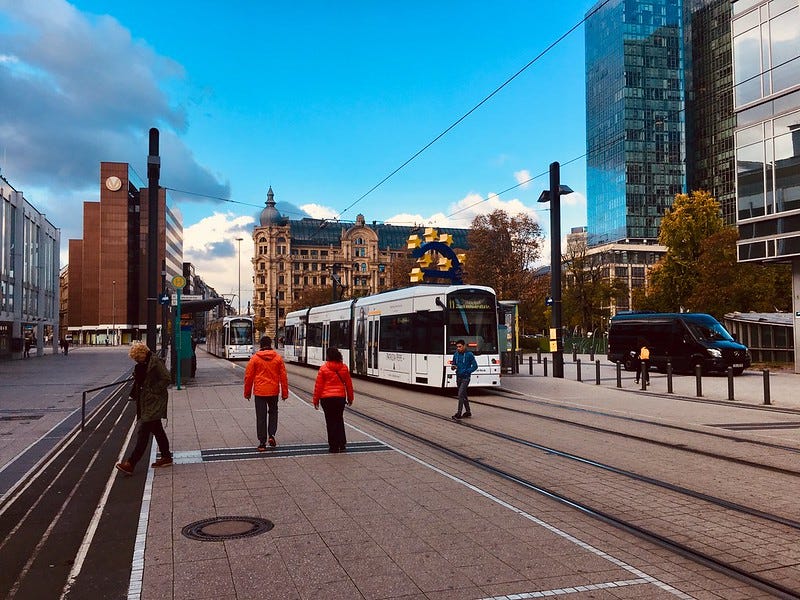
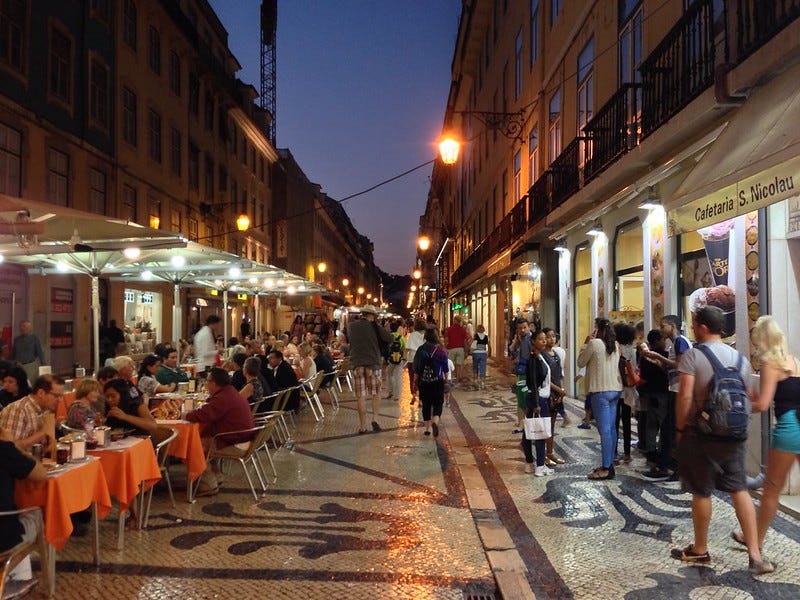
A P-Street is a not a pedestrian street…the kind of street seen all across cities in Asia, Europe, Mexico, and South America, where motor vehicles are not allowed. A “Pedestrian Street” zoning designation, hereafter called P-Street, is an overlay zoning district that reduces the uses (businesses) that are allowed and implements a kind of form-based code that requires certain building façade preservation. (Okay, Boston and some other towns in the United States have pedestrian streets, but they’re rare.)
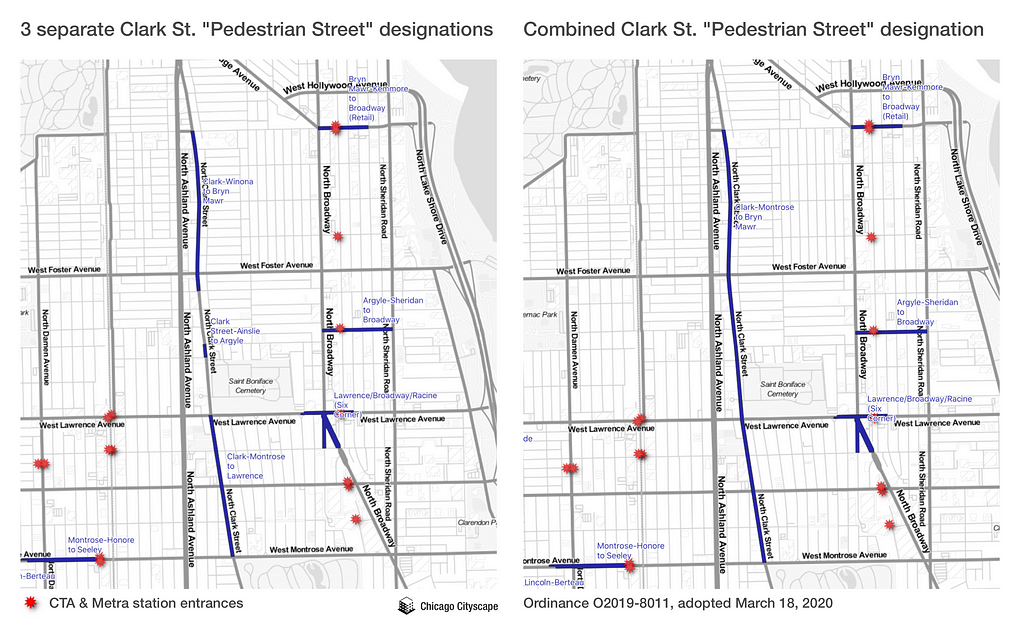
These three P-Streets are being “dissolved” into a new one that also encompasses the non-P-Street blocks between the three P-Streets:
- Clark -Montrose to Lawrence (4 blocks)
- Clark -Ainslie to Argyle (half block)
- Clark-Winona to Bryn Mawr (4.5 blocks)
What changes?
The building in the ~4 blocks in the gaps between the three P-Streets will now be on a P-Street. New banks will be restricted. Businesses on the P-Street have to be more pedestrian-friendly than businesses not on a P-Street, including maintaining a minimum amount of transparency (view into the business) on the ground floor.
New drive-throughs and driveways, which make it dangerous for pedestrians to use sidewalks, on Clark Street between Montrose and Bryn Mawr will not be permitted. Even billboards are banned from P-Streets.
The best change, however, is that parking requirements for most existing and new businesses are reduced to zero. Being on a P-Street doubles the distance a business can be from a CTA or Metra station entrance and still take advantage of the Chicago TOD ordinance that reduces parking requirements. Reducing the parking requirements by half is allowed as of right, and further reductions for non-residential uses can be granted via an administrative adjustment.
Existing and new residential buildings also benefit from that rule, reducing the parking requirement by half as of right, and further reductions can be granted via a special use permit from the Zoning Board of Appeals.
What hasn’t changed is the dearth of P-Streets on the South and West Sides. The decision to create a P-Street is left entirely up to the local alder.
Three North Side “Pedestrian Streets” are being combined was originally published in Chicago Cityscape on Medium, where people are continuing the conversation by highlighting and responding to this story.
Other posts by Steven Vance full archive