A better ADU rule has the potential to build lower-cost houses on vacant land
Published on Dec. 11, 2020 by Steven Vance
Updated on Dec. 15, 2020
Update 12/15/2020: This post has been updated to correct that the revised ordinance’s change to disallowing vacant lots to have a backyard house before a principal house applies only in the West, South, and Southeast “pilot areas”. Read about the pilot areas in this post, and read about the just-adopted revision ordinance.
The revised ordinance that Chicago City Council will consider next week takes vacant lots out of the equation in three of the five pilot areas. It just so happens that the West, South, and Southeast pilot areas where developing backyard houses on vacant lots doesn’t apply are the pilot areas with the most vacant lots.
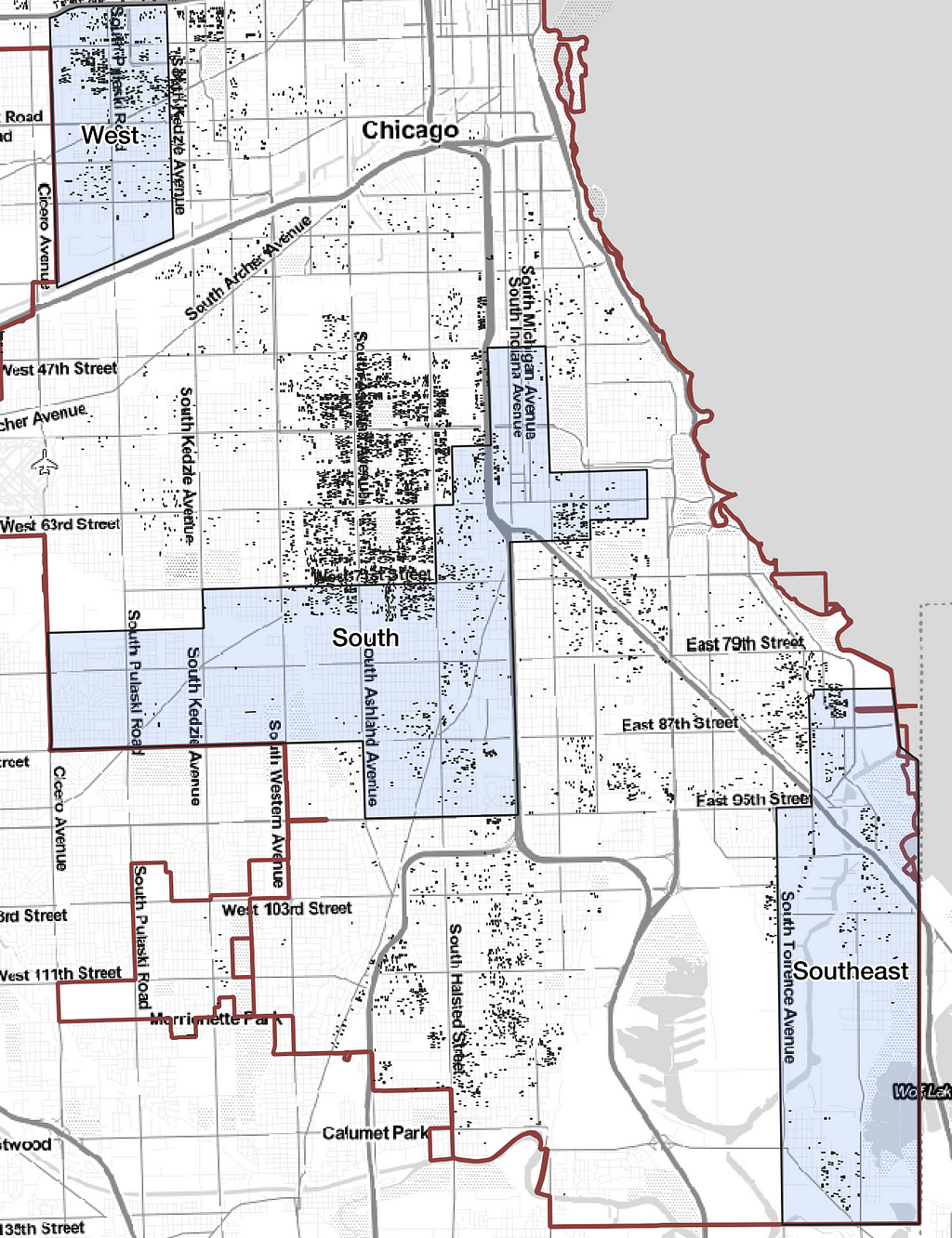
The original proposal, from May 2020, would have allowed a backyard house to be built on a vacant land before a principal house. Inexpensive vacant lots and the lower cost of construction to build a smaller house is a way to build new construction housing quickly and sell at price points that more people can attain.
Dropping vacant lots from Chicago’s first ADU policy in three pilot areas puts a damper on an idea that the people at LEVEL, an architecture firm, had to develop empty land called “Build the coach house first”. The company created nice-looking renderings and a scenario and financial outlook to match.
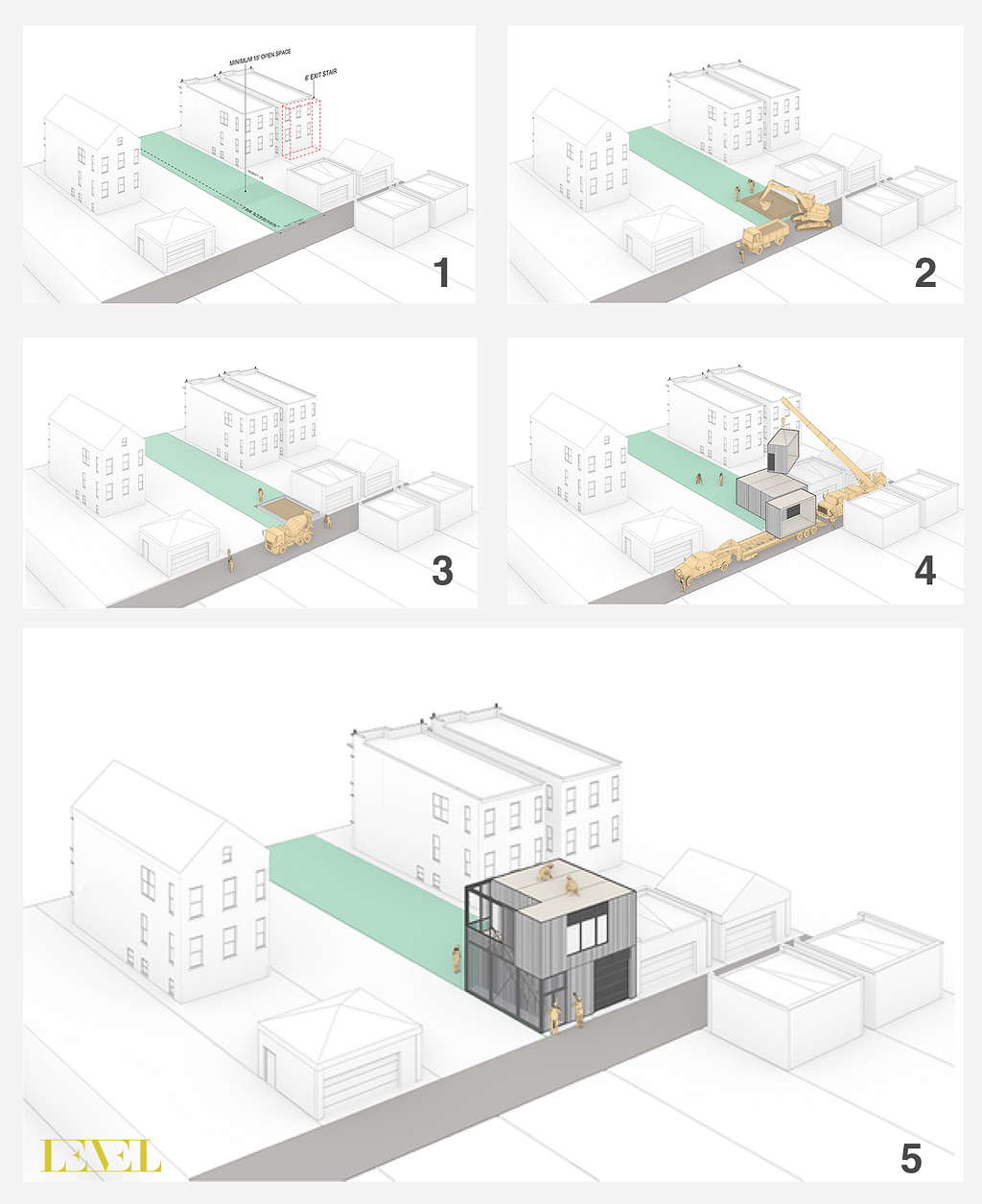

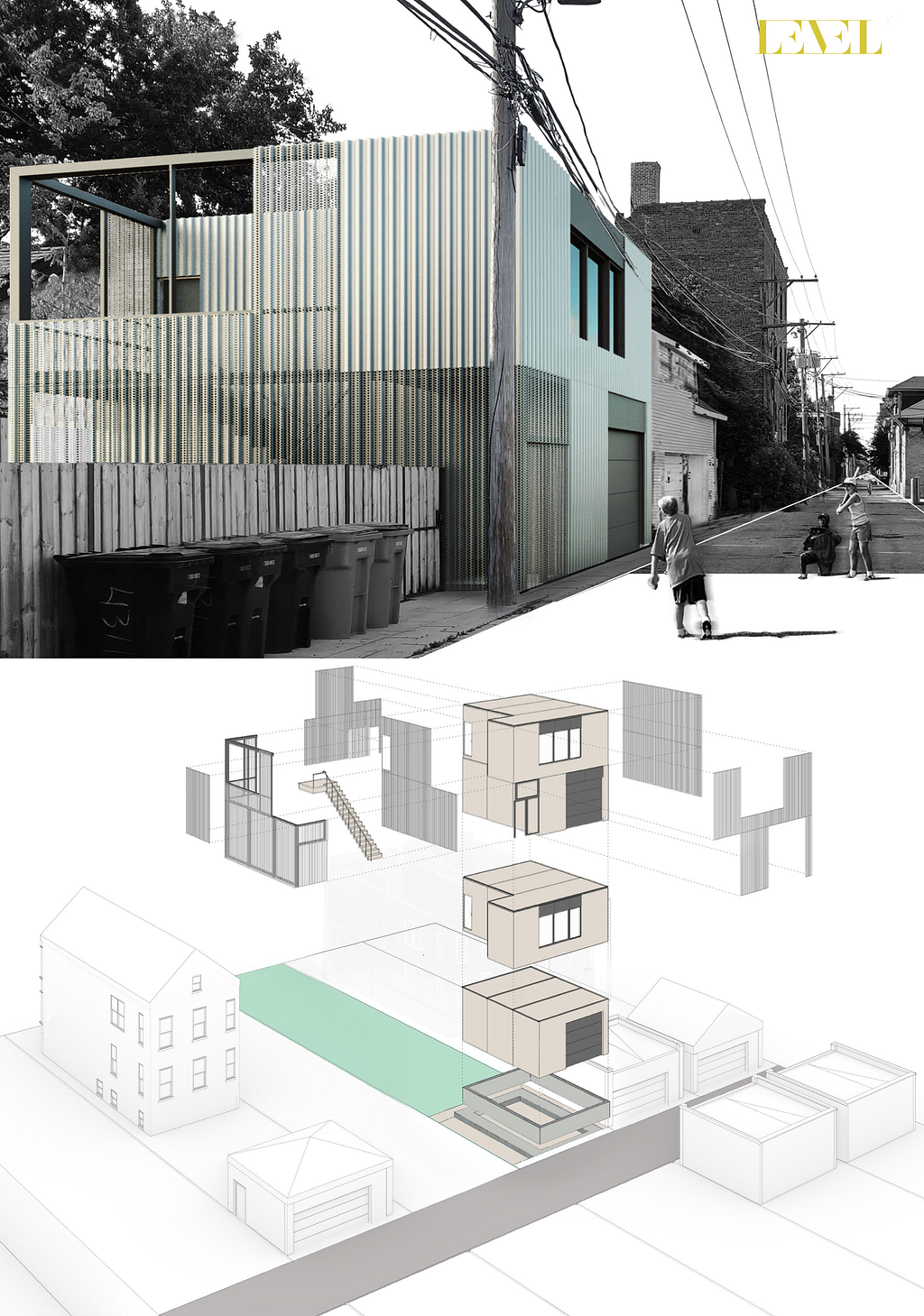
I’ve excerpted part of the story here, but you should read the whole post to visualize how a new family can start with a vacant lot and create long-term housing for them as they grow, adapting to each change in their family size and style.
[John and Maria have recently married and have a lot of student loan debt.] They decide to buy an empty lot [in Bronzeville] and build a coach house first using apprenticed construction labor — the $175,000 investment requires a downpayment of $6,125. On Day 1 of residence in their finished home, John and Maria live on the second-floor while renting the first-floor apartment to IIT students. Several years go by, and they have finally saved enough to build a single family house in front of the coach house. They refinance their home, and are able to take advantage of the improvements they have made to the empty lot. While this obviously increases their mortgage, and their monthly payment, they also now have two apartments they can rent out.
The story continues about how an adult child moves out of the front house and into the backyard house, and then the reverse happens with the parents get older and the child starts their own family. Before you think that this is the imagination of people who are hellbent on densifying neighborhoods, believe that it’s already happening (although it’s more likely in Chicago that it’s happening in a three-flat that a senior family member bought 30 years ago, as backyard houses are a dwindling building type).
What I appreciate most about LEVEL’s work here is the simple images of how a rear house can be built and the potential finance structure to build it.
Is there a vacant lot near you for sale that would be a good starting place to build someone a new house for $175,000?
Look up any Chicago address on Chicago Cityscape to get its Address Snapshot report and see which ADU pilot area it’s in.
A better ADU rule has the potential to build lower-cost houses on vacant land was originally published in Chicago Cityscape on Medium, where people are continuing the conversation by highlighting and responding to this story.
Other posts by Steven Vance full archive