🏗️ Behind the trend of converting commercial space to housing
Published on Apr. 13, 2023 by Steven Vance
Plus: How to locate conversion opportunities in Chicago
I believe that the onset of the COVID-19 pandemic and the related changes in real estate conditions (housing prices, construction costs, where people wanted to live) has caused many property owners in Chicago to optimize and review their portfolios and options, respectively. Many building owners have already obtained building permits to convert office and other commercial spaces to residential, and I think this may have happened at an increasing rate since March 2020.
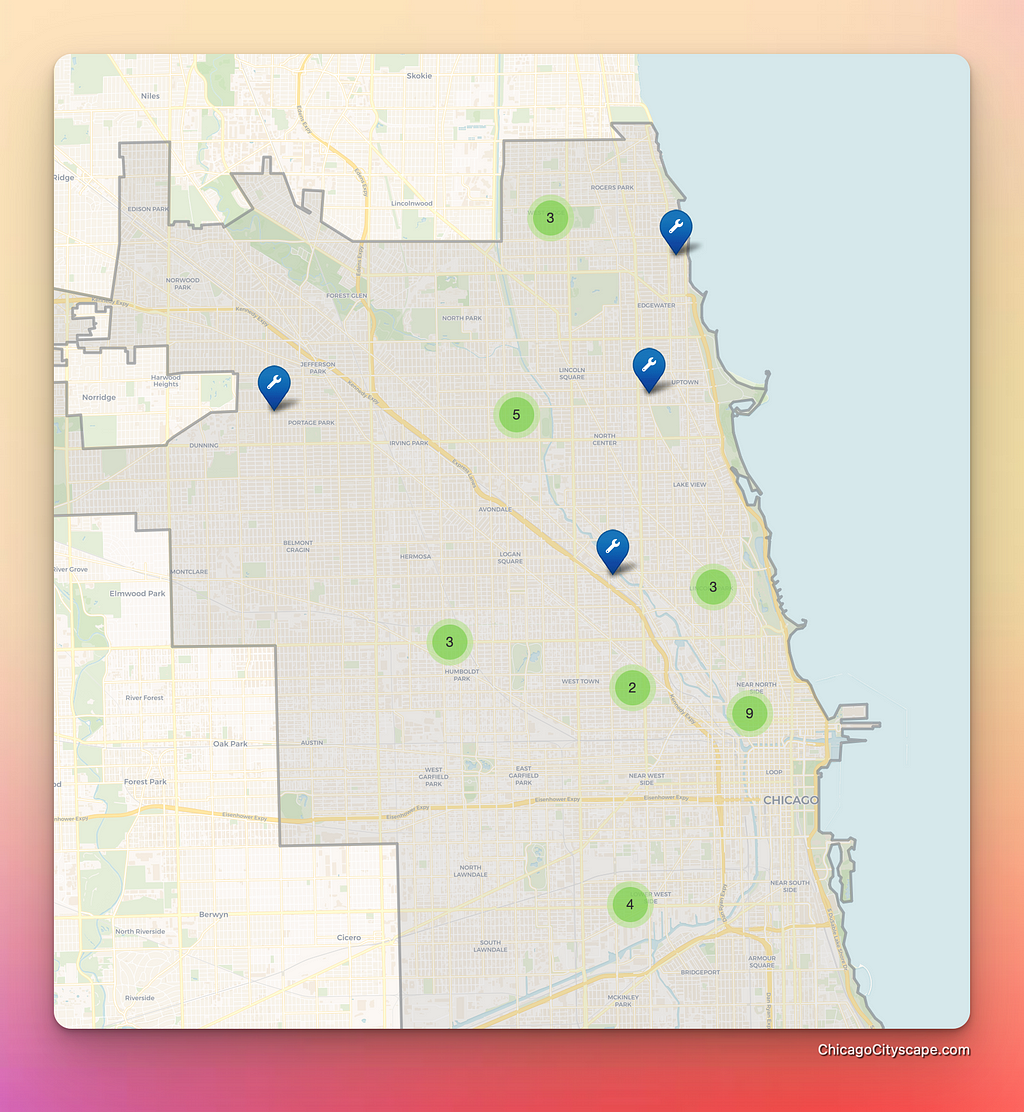
Local data is sparse, however. The City of Chicago does not publish data to count the number of conversions, and Chicago Cityscape only started tracking them manually in December 2020, when I noticed five applications to change underlying zoning and be allowed to make the conversion.
I don’t see the conversion trend declining much soon, but it does not form too significant of a proportion of construction activity.
The number of building permits for conversion have been as follows:
- 2021: 14 permits, 109 units
- 2022: 16 permits, 75 units
- 2023: 4 permits, 4 units
What else is happening in Chicago
- Last month, Mayor Lightfoot’s administration selected three proposals to receive Tax Increment Financing funding to support the construction of 318 affordable dwelling units, out of 1,059 total dwelling units, in vacant office buildings on LaSalle Street to increase the population downtown and revitalize the traditional financial district that is becoming less financial.
- This year, the Urban Land Institute Chicago chapter convened a committee to discuss and propose recommendations for cities and building owners to promulgate additional conversions.
- In 2021, Chicago Metropolitan Housing Development Corporation (CMHDC) converted the ground floor storefronts of an apartment building in Beverly, across from a Metra station, into seven more units.
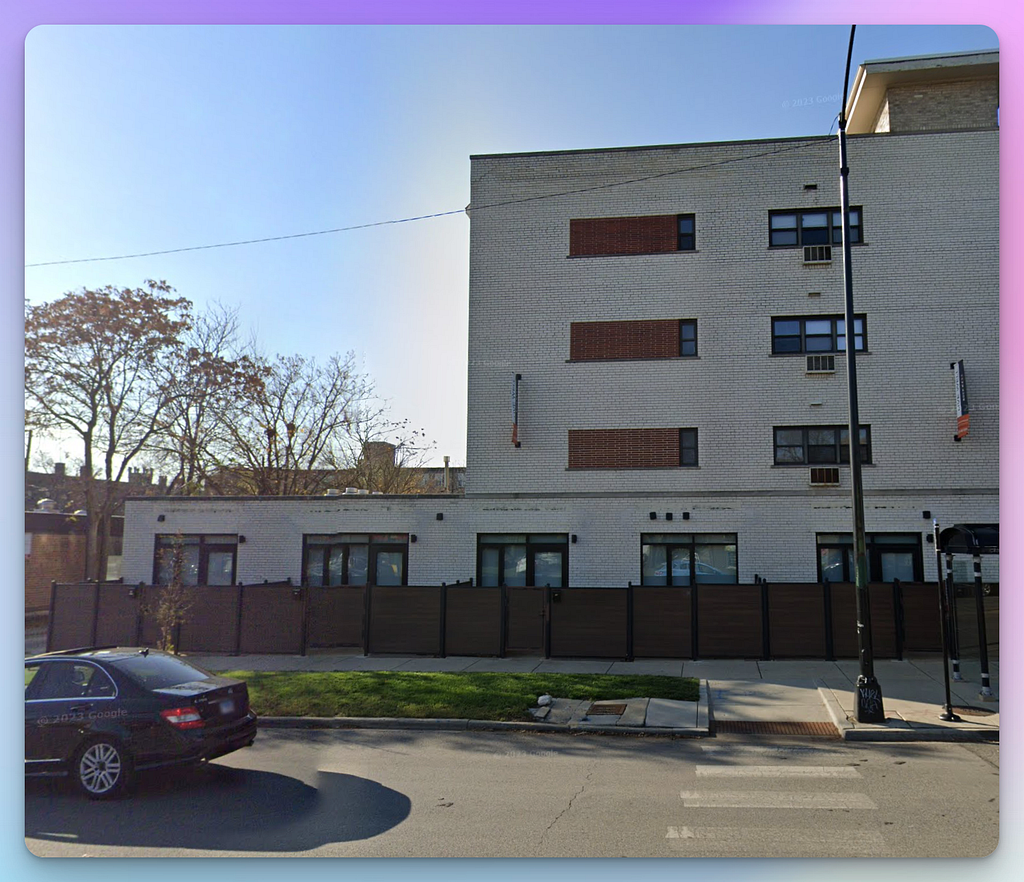
The majority of conversions that Chicago Cityscape has tracked tend to be in very small and older buildings, and are mostly converting upstairs office space to apartments. In some cases ground floor retail is being converted and some of those projects are making the new housing accessible to people with disabilities (see example in the top image).
Nationally the topic is seeing a lot of interest this season…Emily Badger and her colleagues at the New York Times created a wonderful set of diagrams that illustrate the physical problems of converting newer high-rises (many of which you see on LaSalle Street); Enterprise Community Partners, a nonprofit housing developer, has summarized financial options and difficulties.
Tools for Chicago development
To assist our members in determining if their Chicago-based buildings are allowed to have ground floor housing and to find other ground floor conversion opportunities, Chicago Cityscape improved Property Finder and Property Report’s Zoning Assessment.
- Property Finder has two ways to find ground floor conversion opportunities — read this knowledge base article
- Zoning Assessment has been updated to call out this opportunity when a Property Report is accessed for a property in a B2 or DR zoning district.
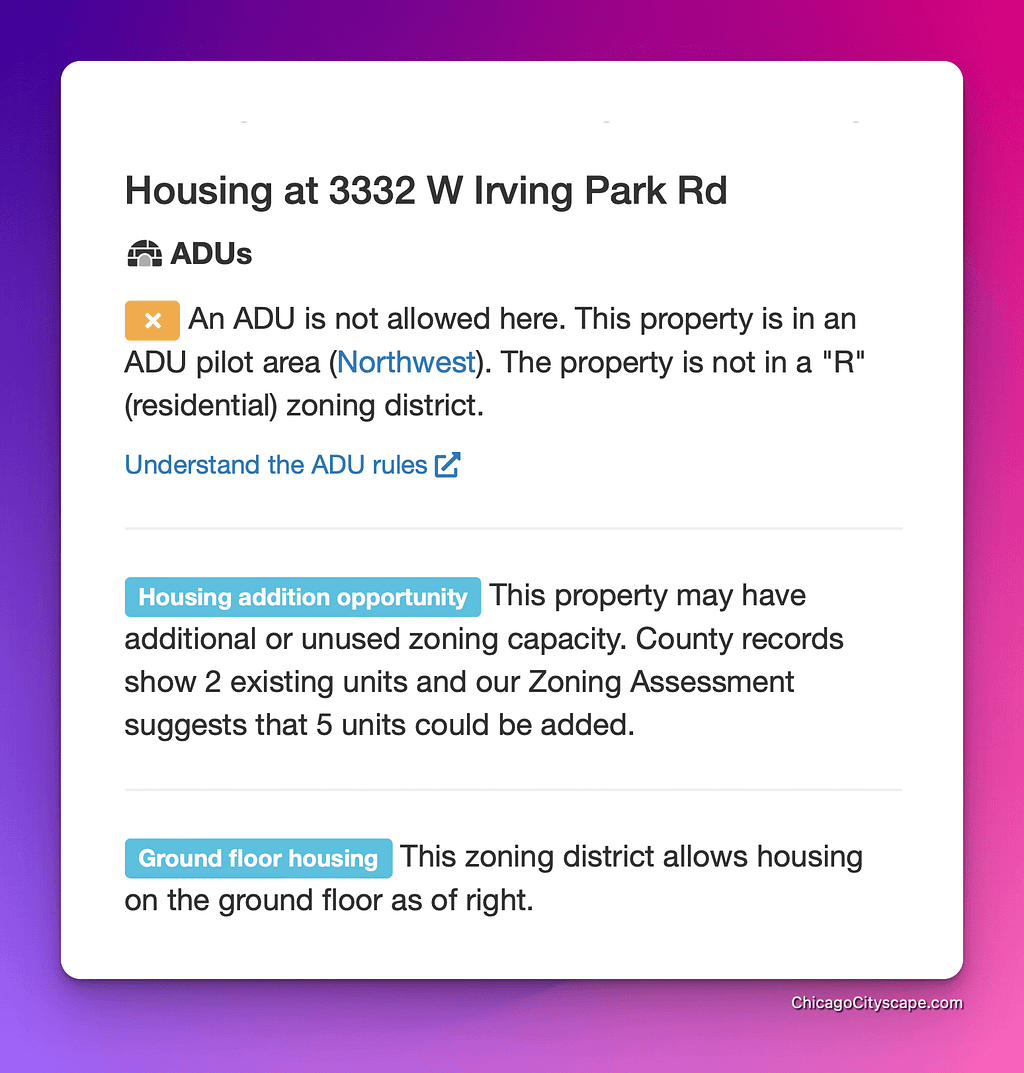
Other conversion opportunities may be easier to find. All buildings in a B, C, R, DR, DX, or DC zoning district allow housing and every Property Report’s Zoning Assessment will calculate how much housing is allowed at any given property in Chicago. (Look up an address or PIN.)
Want a tour on how to locate conversion opportunities? Start a free trial of Chicago Cityscape’s Real Estate Pro membership and we’ll contact you.
Behind the trend of converting commercial space to housing was originally published in Chicago Cityscape’s Blog on Medium, where people are continuing the conversation by highlighting and responding to this story.
Other posts by Steven Vance full archive