Chicago’s ADU ordinance explained in a 4-minute video
Published on Dec. 21, 2020 by Steven Vance
Updated on Jan. 19, 2021
In which I attempt to explain the most salient parts of the recently-adopted accessory dwelling unit ordinance in under four minutes.
https://medium.com/media/75c1f295defed4cdb9e80cbfd7623b77/hrefI’ve outlined the video content below.
- City Council has re-legalized accessory dwelling units
- These are commonly known as coach houses, basement and attic apartments, granny flats, and so many other names across the country.
- Quick timeline of City Council (May 2020, July 2020, December 2020)
- Allowed in 5 pilot areas (North, Northwest, West, South, Southeast); within those, it includes all R zones, except RS-1.
- If a house has 1-4 units, can have a backyard house or an interior ADU; city ordinance calls them coach house and conversion units, respectively
- If a building has 5 units or more, cannot have a backyard house, but can have 2 or more interior ADUs; Can increase the number of units by 33%. A 12-unit courtyard apartment building can add 4 units.
- When adding 2 or more interior units, every 2nd unit must be affordable
- For adding interior units, buildings must be 20 years or older.
- No additional parking is required
- Backyard houses do not conflict with FAR and minimum lot area per unit rules
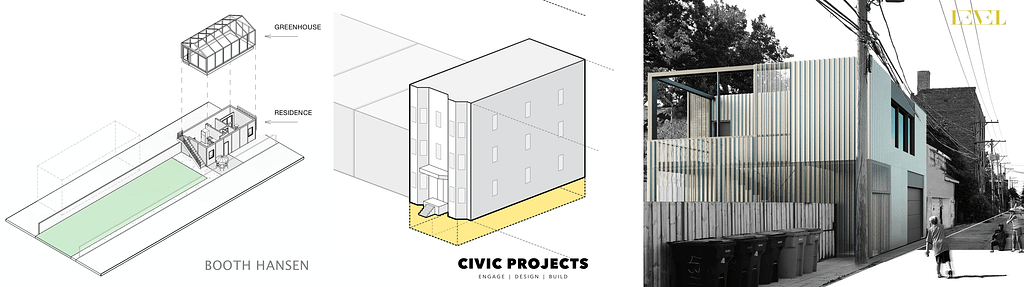
- Interior ADUs do not conflict with minimum lot area per unit rules, but FAR is still applicable if the building is getting an addition (up, rear, or side) to accommodate the interior ADU. These are rules your architect needs to know.
- Vacant lots can be developed with a backyard house prior to a principal house
- No short-term stays or vacation rental is allowed in the ADUs
- The pilot areas have two rulesets. The north and northwest areas have the default rules, as I just described them, while West, South, and Southeast areas have different rules.
- Vacant lots are excluded (W, S, SE)
- Buildings with 1–3 units must be owner-occupied in order to add a backyard house or interior ADU (W, S, SE)
- Only 2 permits for backyard houses and interior ADUs can be issued per block per year. A block is both sides of the street between two intersecting streets. (W, S, SE)
- You can learn more on Chicago Cityscape, where we have a section dedicated to learning more about ADUs. You can look up your address to see if it’s eligible. We also have an ADU service provider directory that lists architects, contractors, and manufacturers. (W, S, SE)
- Send pictures when you’re building your ADU!
Chicago’s ADU ordinance explained in a 4-minute video was originally published in Chicago Cityscape on Medium, where people are continuing the conversation by highlighting and responding to this story.
← Older article
Chicago will allow ADUs starting in May — Read our FAQ
Newer article →
Cityscape’s Top 12 stories of 2020
Other posts by Steven Vance full archive