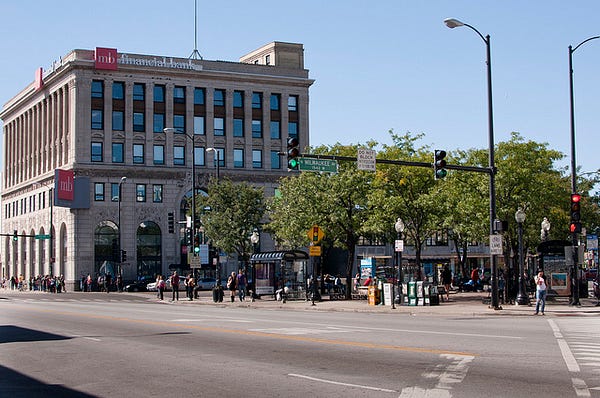
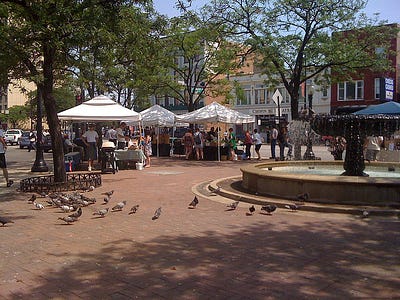
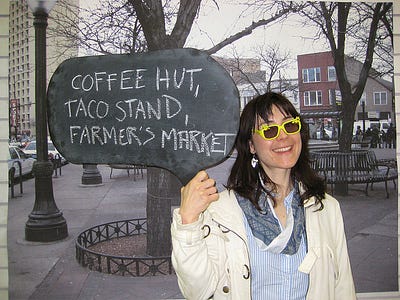
- The Polish Triangle Coalition is looking for a firm to donate design work to revitalize the plaza in Wicker Park (Our Urban Times)
- An owner of 20 vacant lots in Englewood still wants to build new homes out of used shipping containers (DNAinfo)

- Long read about development opportunities in Woodlawn, especially in the area next to the future Obama presidential library, where Apostolic Church of God owns about 40 vacant lots; if you’ll recall, the church’s previous pastor persuaded the CTA to demolish part of the 63rd Street ‘L’
- Architizer explains every type of affordable housing, at the same time that HUD comes out with new snapshot data on the characteristics of subsidized and public housing in Chicago
- William Freeland posted a striking infographic showing how many people, and how much wealth, has migrated out of Illinois
- The city’s Neighborhood Opportunity Fund, which developers pay into by “buying density” for their buildings, has $4 million and will soon be accepting grant applications from small businesses in these areas
- City Bureau looks into why it can be a problem for a small business district if many of the storefronts are churches, not businesses (Defender)
- The two-flat makes Chicago Magazine’s list of “why we love Chicago”
- Argus Brewery in Pullman is featured in a story about the history of their building, part of the Schlitz brewing company’s facility
- More coverage of Alder Moreno’s attendance at a $50 per plate dinner to talk about gentrification: He wants to raise the demolition permit fee to preserve homes near the 606; The “People’s Potluck” happened on the same night to talk about the same issue.
Tip: Find out if a property can get funding assistance
Chicago Cityscape is an all-in-one tool for property professionals — developers, real estate brokers, and architects — to learn about properties you’re considering to add to your portfolio.
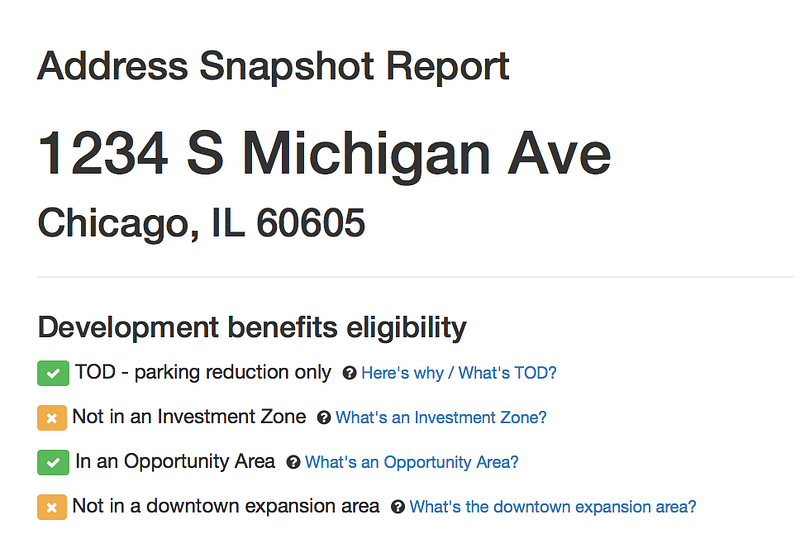
Look up any address to instantly determine the eligibility of a property for a density increase in a TOD zone, and whether it’s eligible for improvement grants from TIF districts, Special Service Areas, and the Neighborhood Opportunity Fund’s investment zones.
A property might also be in one of the Chicago Housing Authority’s opportunity areas, where landlords can get a cash bonus, or developers can get construction assistance for building multi-unit affordable housing.