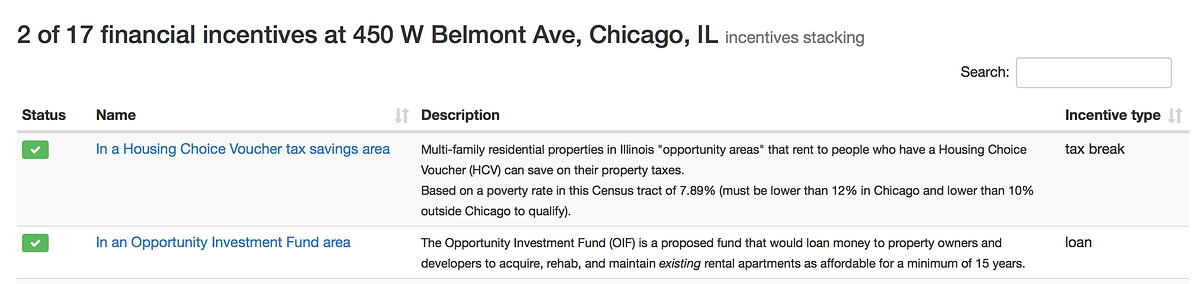
Update: Adopted by City Council on July 25, 2018
Update: Freddie Mac now offers a similar program called the Workforce Housing and Targeted Affordable Mezzanine Loan.
Two weeks ago Mayor Rahm Emanuel announced the creation of an “Opportunity Investment Fund” which the City of Chicago would seed with $5 million. The $30 million fund is predicted to generate 300 affordable apartments with low-interest mezzanine loans. The OIF’s intention is to increase the amount of affordable housing, in existing buildings, by filling a gap in the mortgage market for small and mid-size property owners and developers.
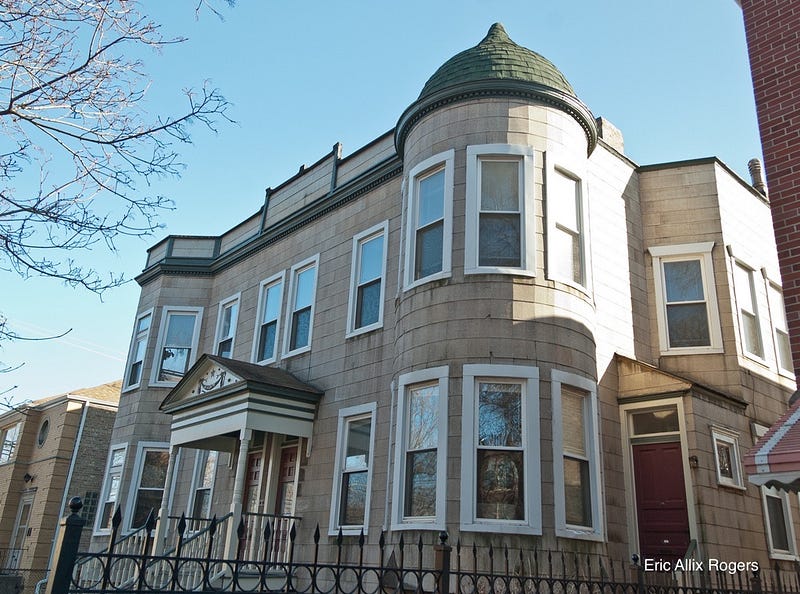
Investors, owners, and developers would apply for funding from the Community Investment Corporation (CIC) to provide them with more equity. Typically, a bank will loan 80 percent of the value (loan to value ratio, LTV) of a property acquisition or construction loan and the developer must provide the remaining 20 percent LTV with their own equity. The OIF loan would cover up to 10 points of the remaining LTV, leaving the developer to cover the last 10 points.
Stacie Young, Preservation Compact director, said this is called subordinate or mezzanine debt. “Our fund will take you to 90 percent, and we’re charging you a very low interest rate,” she said.
“Typically,” Young said, “mezzanine debt in the market might cost you 14–15 percent, and ours is priced at 7.5 percent, in the best case, and it goes up from there. It’s a lot cheaper than the market mezzanine.”
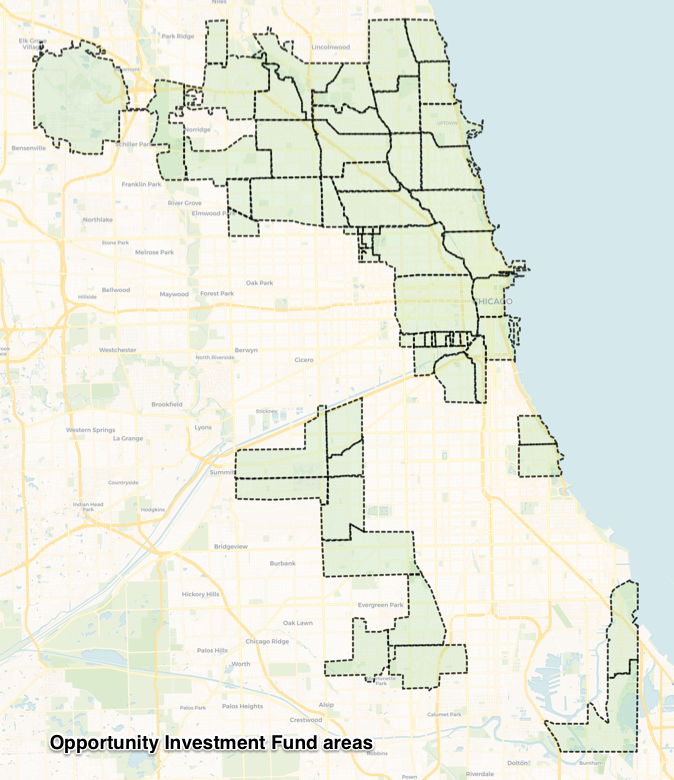
The funds will only be used to acquire existing rental buildings in high opportunity areas — these are areas with a low concentration of poverty, lower crime, and higher employment rates. Preservation Compact is also calling these areas “strong markets”.
The map of eligible areas was made by combining the Chicago Housing Authority’s “mobility areas” with the Illinois Housing Development Agency’s “opportunity areas”.
But, Young said, “We’re not holding fast to these boundaries. A developer could make the case for us to lend to them outside the boundaries.” The final rules will be set after City Council approves the ordinance, and the CIC and Department of Planning & Development commissioner sign an agreement.