Right after I launched the two petitions to re-legalize coach houses and ADUs in Chicago, Larry Kearns, an architect and principal of the firm Wheeler Kearns, sent me a document that made the case for accessory dwelling units and included drawings for new coach houses in Chicago. The document — titled “Coach Homes” — read like a nicely-designed magazine article about a new housing type.
It was nice to see that someone else had done a lot of research about ADUs, like myself, and included examples from other cities. However, Larry’s document (download it) filled a gap in my knowledge about ADU design; in addition to the research text, the document has great visuals.
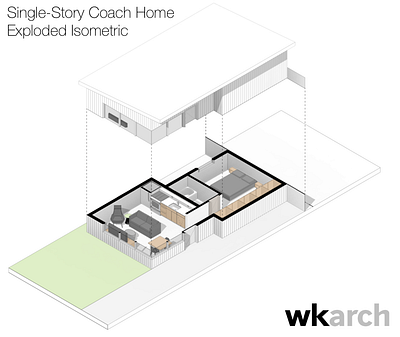
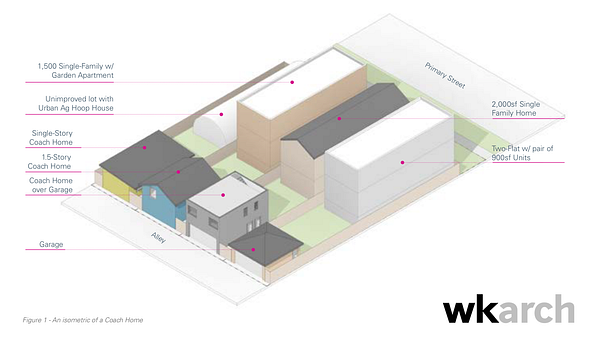
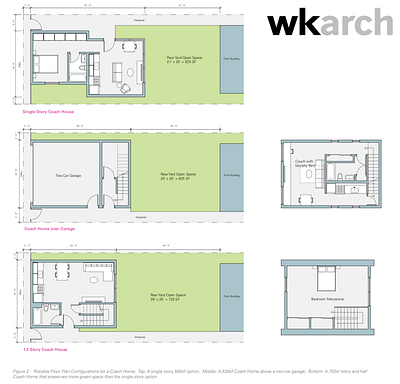
I met Larry Kearns last month at his office to talk about coach houses and accessory dwelling units so I could understand the document’s background.
Larry and the architecture firm that bears his name had submitted that document as a tiny house proposal for a “request for ideas” from Mayor Emanuel’s office. (Emanuel’s solicitation apparently went nowhere, especially as no building code and zoning code changes necessary to allow tiny houses have been proposed or adopted.)
He and some of the Wheeler Kearns staff went on a retreat of sorts to Vancouver, British Columbia, Canada, to see the “laneway houses” there. That’s one of the dozen alternative names for an ADU, and one specific to that region. In Austin, Texas, for example, they can be known as alley flats. I also like “house behind a house” and “little house”.
The creators of “Coach Homes” and I thought a lot alike in describing the benefits of ADUs. I’ve been saying that re-legalizing them in Chicago has a quintuple bottom line (that’s two more benefits than a triple bottom line).
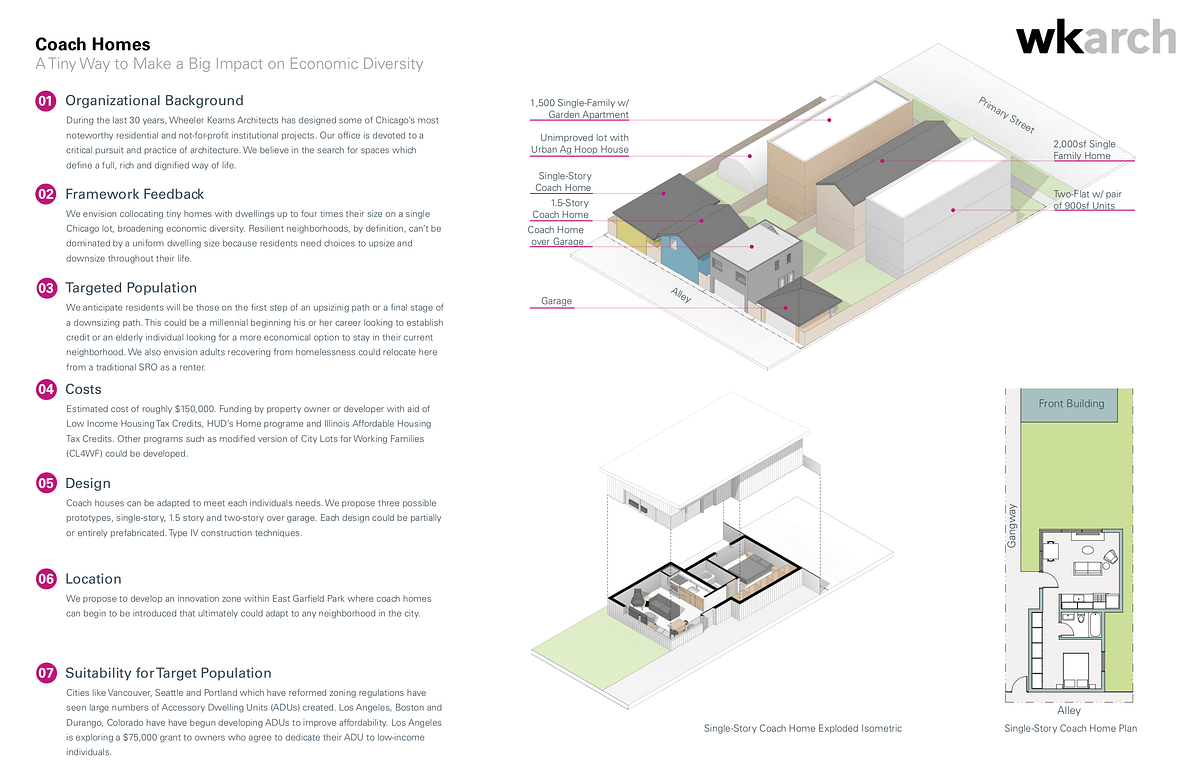
The document’s first line makes it clear what ADUs can do: “Coach Homes: A Tiny Way to Make a Big Impact on Economic Diversity”. If you’re already a coach house proponent, then I think you’ll enjoy the document’s renderings.
If you’re not yet a coach house supporter, then perhaps the document’s eloquent language about the history of coach houses in Chicago and how they can reinvigorate our neighborhoods’ housing stock designs and variety will persuade you.