Over 1,225 people have signed the petition to re-legalize coach houses, rear houses, and other accessory dwelling units. Several aldermanic candidates who said they support it won, or will be in a runoff. I am still trying to contact those who haven’t yet said they support the re-legalization. I have heard that Mayor Emanuel will introduced draft legislation to City Council this month, and I’m excited to see what policy the planning department proposes.
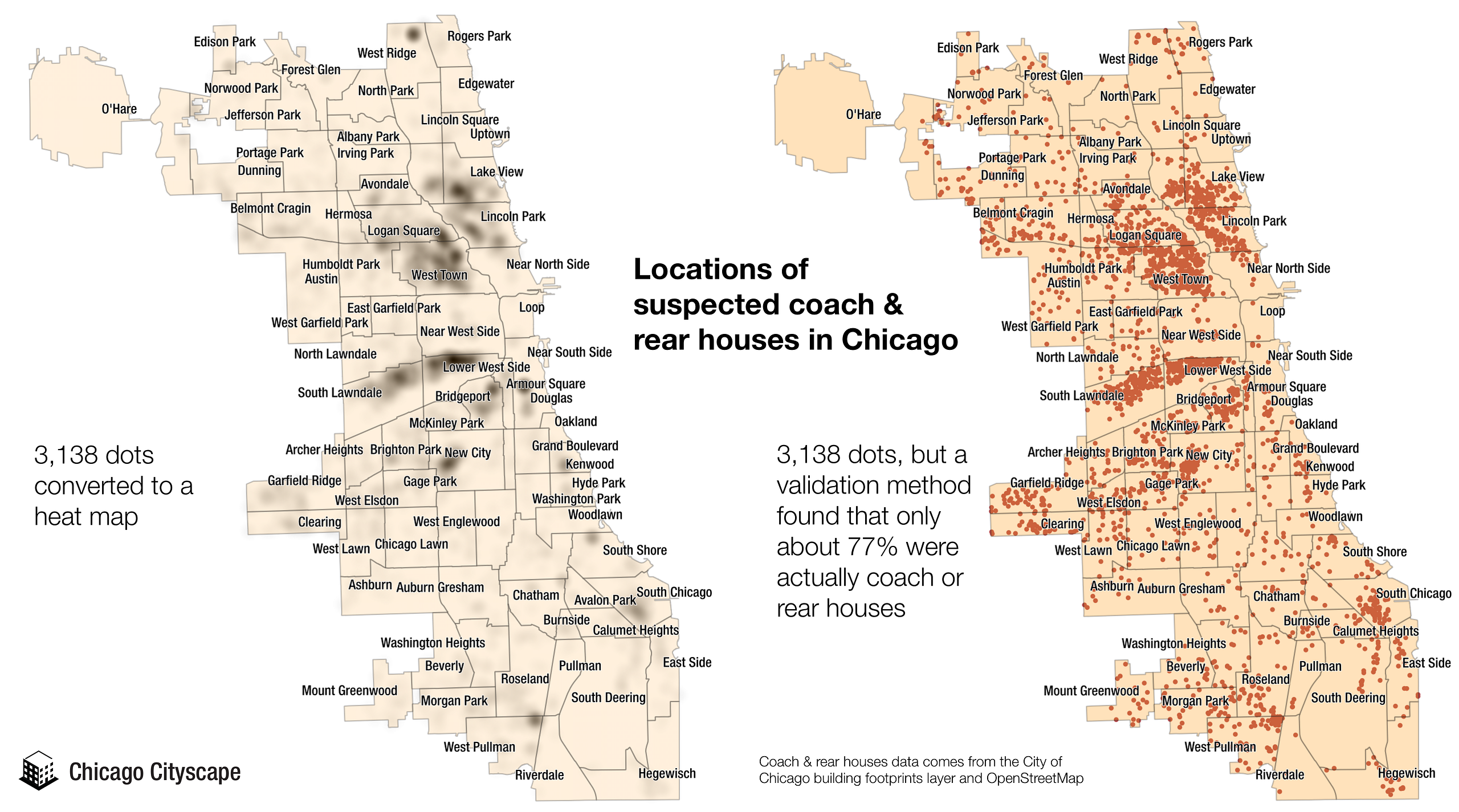
And City Open Workshop has adopted a single project for its sixth season: educating people and community groups about ADUs. Last month we hosted a simulated community meeting (read the recap) to generate ideas on how people might respond to proposals for new ADUs in their neighborhoods, and I presented my coach house counting method.
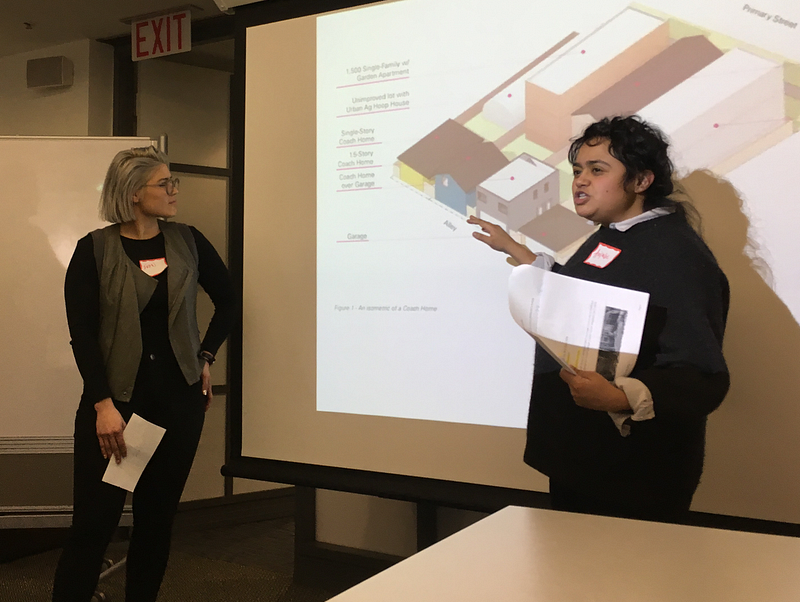
The final goal of the workshop is to produce a community clinic for neighborhood-based organizations to hear about ADU policy, the benefits of allowing ADUs in a neighborhood, and learn and discuss ways to address affordability, noise, vacation rental, and other concerns. There are some exciting ways that jurisdictions and organizations around the country (look at what LA Más is doing in Los Angeles) are trying to ensure that ADUs are affordable.
My ideal ADU policy in Chicago is that two ADUs are allowed in every R-zoned lot, with no parking requirement, and the ADUs can be in an existing building or in a new building (a 2-flat rear house or a 1-unit coach house + basement unit in the front house, to give two examples). This would legalize existing basement, attic, and illegally built coach houses. New buildings couldn’t be taller than existing buildings, but they could be larger and even in the front of the lot if it doesn’t have a front house (like this one in East Garfield Park).
The city policy would be combined with a multi-lingual building permit and “homeowner advocate” program at the Department of Buildings; there could be pre-permitted prototype designs for off-the-shelf new construction, designed by local architects who would be paid with a willing foundation’s grant money and sustained with a small licensing fee that the homeowner would pay — to reduce construction and permitting costs.