At Chicago’s first cannabis zoning meeting on Tuesday, October 8, at Malcolm X College (the first of three), four people offered comments and criticism of the City’s proposal to exclude a large swath of the Central Business District from hosting pot dispensaries. (Read the proposed zoning rules.)
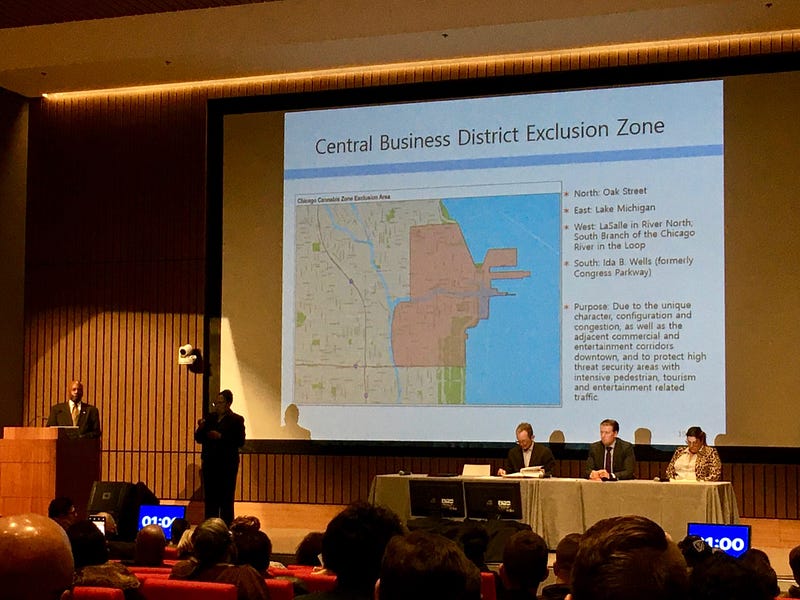
The city’s reasoning, said Deputy Mayor Samir Mayekar to the Chicago Tribune, was “From a public safety standpoint as the industry develops, it was best to exclude that from operations. But there’s plenty of areas within a short walk of the area.”
Other reasons cited at the meeting included the density of tourists, traffic congestion, and non-specific security concerns.
The objectors’ comments included:
- Bryen Yunashko, who is deaf and blind, said that downtown was the most accessible part of Chicago for people with disabilities and dispensaries in downtown would be the easiest for the people he knows to acquire product. Paul Stewart, a mayoral policy advisor, responded that not all of downtown is excluded. (Note that all CTA stations in the Loop — elevated and subway — are in the exclusion zone. Additionally, the busy Merchandise Mart, Chicago-Brown and Chicago-Red, and Grand stations are in the proposed exclusion zone. Ogilvie and Union Stations are not in the downtown exclusion zone, but the Millennium and LaSalle Stations are in the exclusion zone.) Read more of Yunashko’s comments in the Chicago Sun-Times.
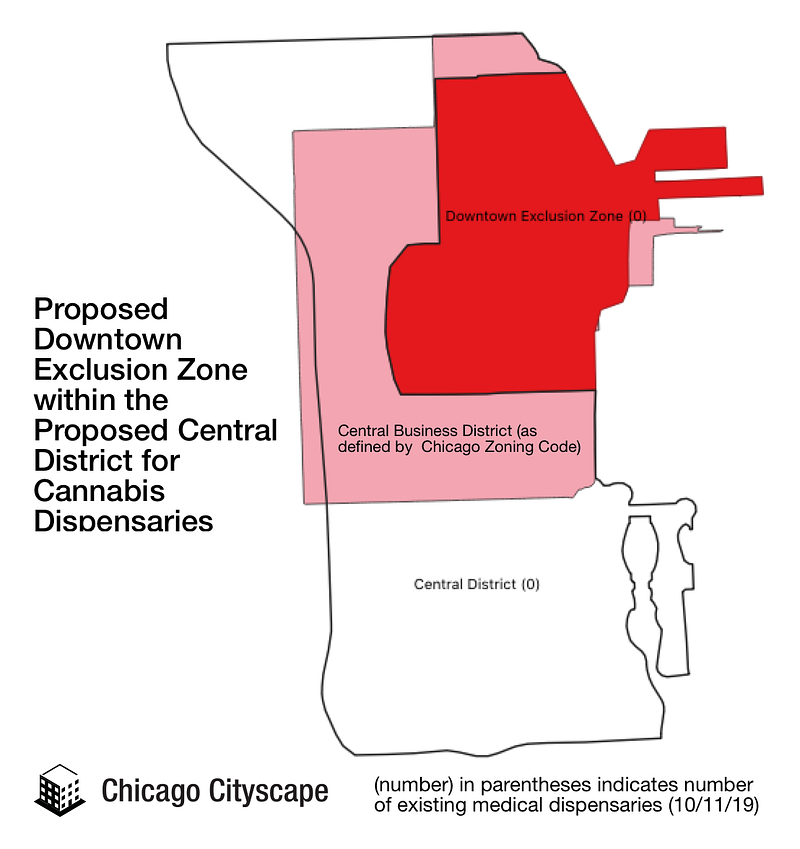
- An attendee asked for the rationale to be explained, mentioning that there are seven liquor stores and “countless bars and restaurants”. Paul Stewart responded that the City considered traffic patterns, congestion, tourism, and security. Alder Tom Tunney (46th Ward) said he doesn’t speak for Mayor Lightfoot, and that it’s about spreading the dispensaries around the city.
- Mike Malcolm stood up to say that some companies can afford the high rent prices in the downtown exclusion zone and pushing them out to open dispensaries outside of downtown could have negative economic effects for individuals and small businesses that don’t want to open downtown. (Mike Malcolm)
- Another attendee said that the securest place in the city is downtown, likely implying that the downtown is an ideal place for a business type that has elevated security requirements.