Two housing developments have been proposed in the Rogers Park community area that would expand the number of residential units in each existing building. According to Alder Moore’s website, David Gasman has an agreement to purchase two buildings near the Rogers Park Metra station contingent on Moore granting each building a zoning change.
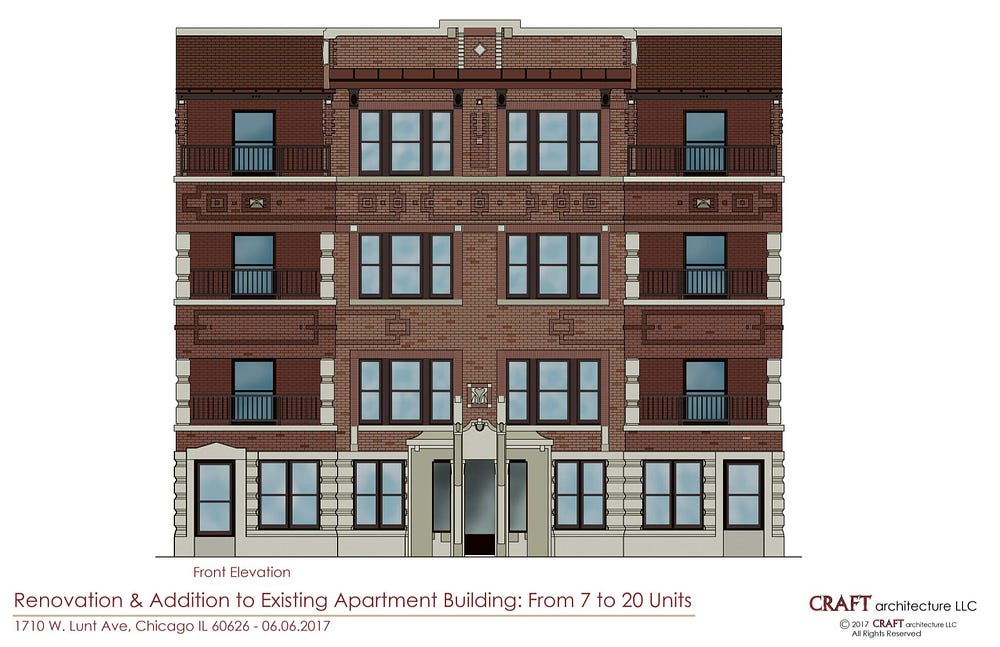
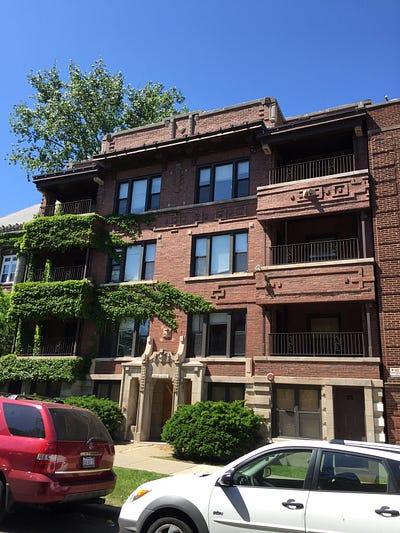
The building at 1710 W Lunt Ave (above) would need a zoning change from RT-4 to B2–3 in order to expand the number of units from 8 to 20 in a three-story rear addition, and to take advantage of the TOD law so the property could have 5 car parking spaces instead of 20.
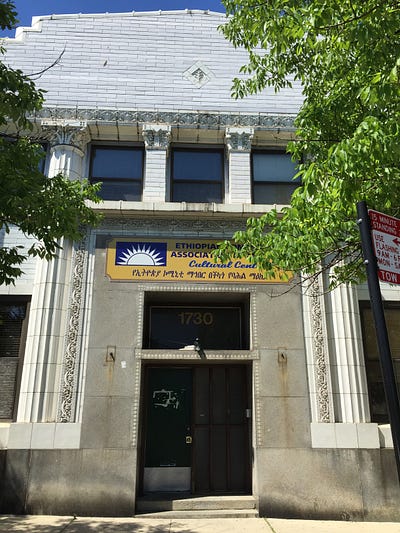
The building at 1730 W Greenleaf Ave (below) would need a zoning change from C1–2 to B2–3 in order to build out 30 dwelling units inside the existing commercial building. The building would also need the Zoning Administrator to relieve the rule so the building can have zero car parking spaces under the TOD law. Moore’s website says he would support the zoning change for this building if the relief comes as a Type 1 amendment rather than an administrative adjustment, to ensure that the renovation strictly adheres to the proposed plans and approved permits.

The city’s Affordable Requirements Ordinance (ARO) will kick in on both projects because they (1) have 10 or more dwelling units, and (2) receive a zoning change. This means that 10 percent of the units in each building will have to be affordable to a household earning up to 60 percent of the Area Median Income (AMI). Of those units, 25 percent must be on-site, and the remaining 75 percent can be on-site, or “bought out” with an in-lieu fee of $50,000 per unit.
Network 49, a neighborhood organization, is going to ask Alder Moore to require that a legally-enforceable Community Benefits Agreement (CBA) gets drafted and signed, so that the developer provides a public benefit in exchange for the zoning change because “that exchange is worth a ton of $$$ for the developer”.
Arguably, the ARO already takes care of that, as does the provision of additional dwelling units in the neighborhood. A greater supply of housing maintains housing prices, or has slower increases, compared to an area that has restricted — often due to zoning or community opposition — housing growth.
The zoning change for the building on Lunt should be granted without question because the current zoning downzoned the block and placed it and buildings nearby into “legal, non-conforming” status. In other words, the previous zoning was denser than the current zoning, and allowed this building and adjacent buildings to be constructed in the first place.
Moore and Gasman are hosting a public meeting on Wednesday, June 14th, 7:00 p.m., at the Ethiopian Community Center of Chicago, 1730 W. Greenleaf.