I wrote an article in Streetsblog Chicago yesterday looking at the historical population and future zoning capacity of the Census tract I live in. I live next to the Bloomingdale Trail and one of the 606 access parks. The Institute of Housing Studies at DePaul University created a map showing where they believe housing displacement pressure is very high, which includes my Census tract, #2301.
Neighborhood news is at the end of this post
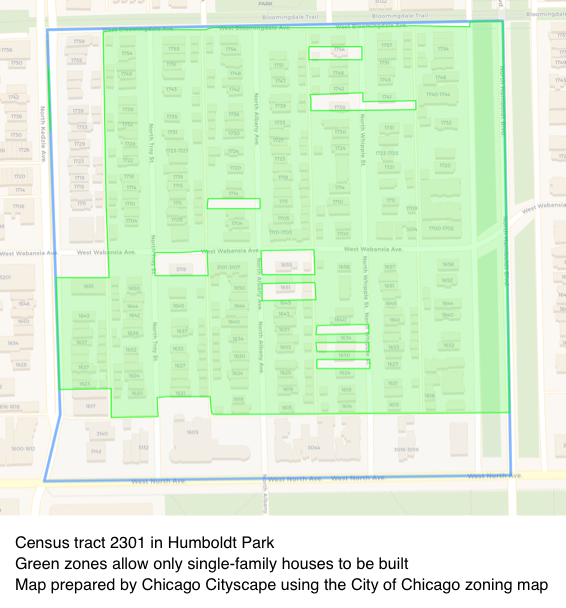
The predominant zoning district in this tract is RS-3, which allows only single-family housing.
From 2000 to 2016, 480 people have left the Census tract, but at the current average household size, and the number of vacant units and lots left, there’s no way they could all move back.
If every one of the vacant lots got new housing maxed to its current zoning allowance, only about 80 additional people could fit back into the Census tract. (Some of the 17 lots that were vacant in 2015 are getting new construction this year, with multi-family housing being built on the lots that allow it, and single-family houses getting built on the lots zoned for SFH.)
The previous zoning districts in the tract, before the time in 2004 when many neighborhoods across Chicago were downzoned, had more areas that allowed multi-family housing than today. Only 24 percent of the tract allows multi-family housing, despite many legal, non-conforming multi-family buildings.
Some of the data in the article was made possible by our new Zoning Assessment tool, and being able to draw my Census tract as a Personal Place to count the number of vacant lots there. Contact us if you would like assistance or demonstration on how to use these tools.
Neighborhood news
Speaking of displacement, a symposium earlier this month heard from many local experts and developers about how neighborhood amenities like the 606 and train stations can increase housing prices and push people out. The event was sponsored by developer Enterprise Community Partners, and members of SPARCC. (Streetsblog Chicago)
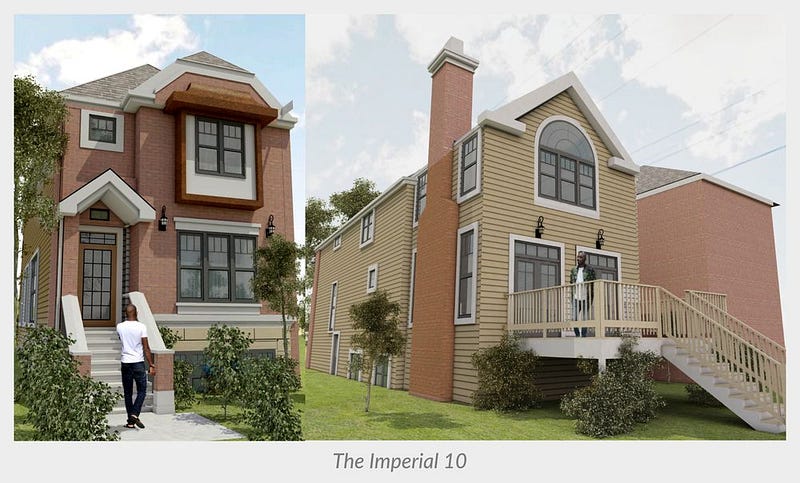
Mayor Emanuel showcased the model houses in the 3rd Ward “Parade of Homes” initiative, where the city sold vacant lots to five developers for $1 each. The houses are not necessarily affordable; one purpose is to add new housing stock to an area with many gaps on the blocks. (Curbed)
A building in Pilsen with many fine architectural details is listed as “Orange rated” in the Chicago Historic Resources Survey, and as “contributing” in a National Register of Historic Places historic district. Yet it’s being demolished. What gives? (Chicago Patterns)