Chicago’s modular, electric house industry welcomes Inherent Homes
Published on Jan. 26, 2023 by Steven Vance
Updated on Feb. 6, 2023
What are you doing on Saturday, February 11, 2023, between 11 AM and 2 PM? That’s the time to check out a brand new, all-electric modular house. Head over to Humboldt Park and wander through Inherent Homes’s first house for sale.
(If you can’t make it to 647 N Lawndale Ave, there will be future open houses every other Saturday until the house is sold.)
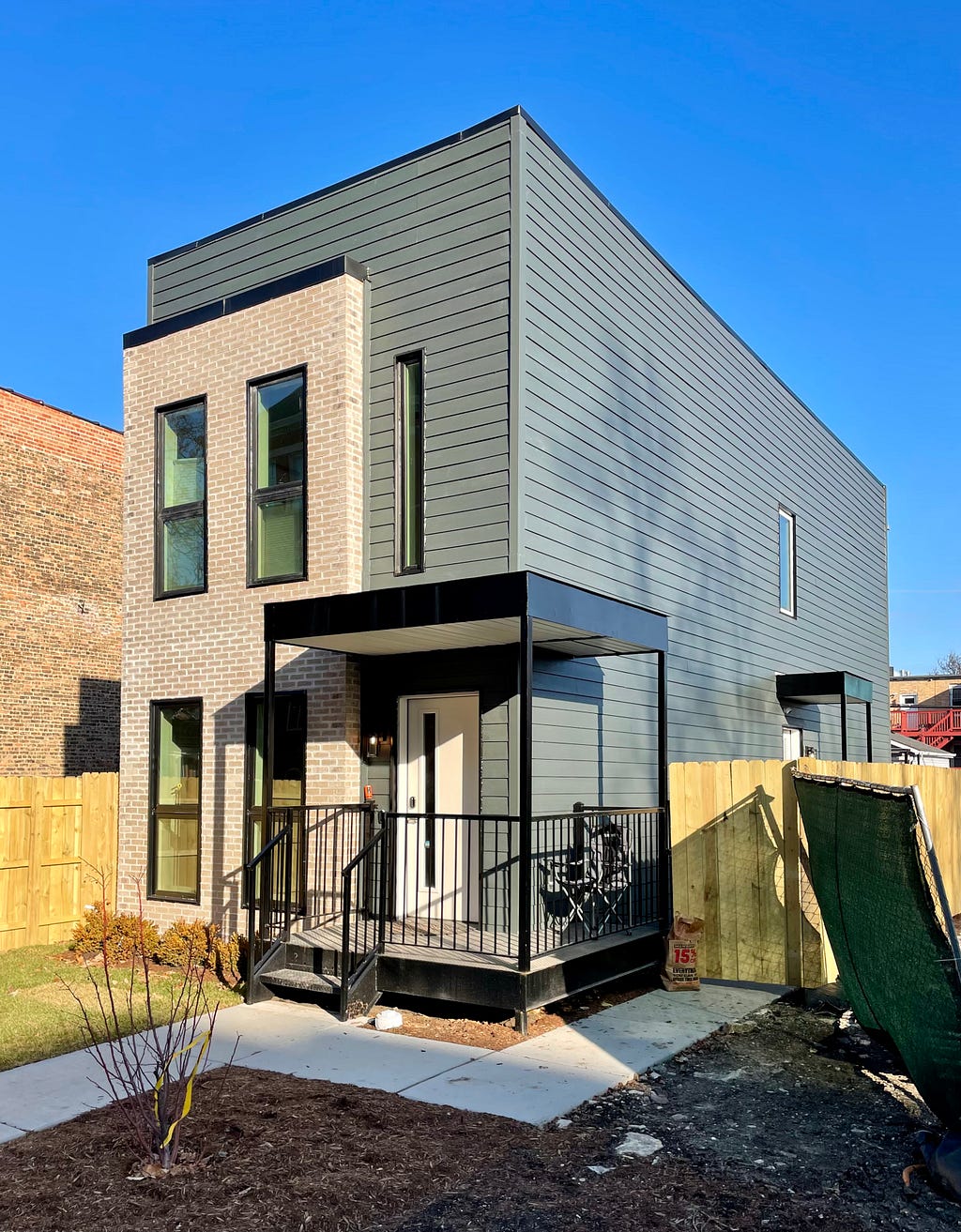
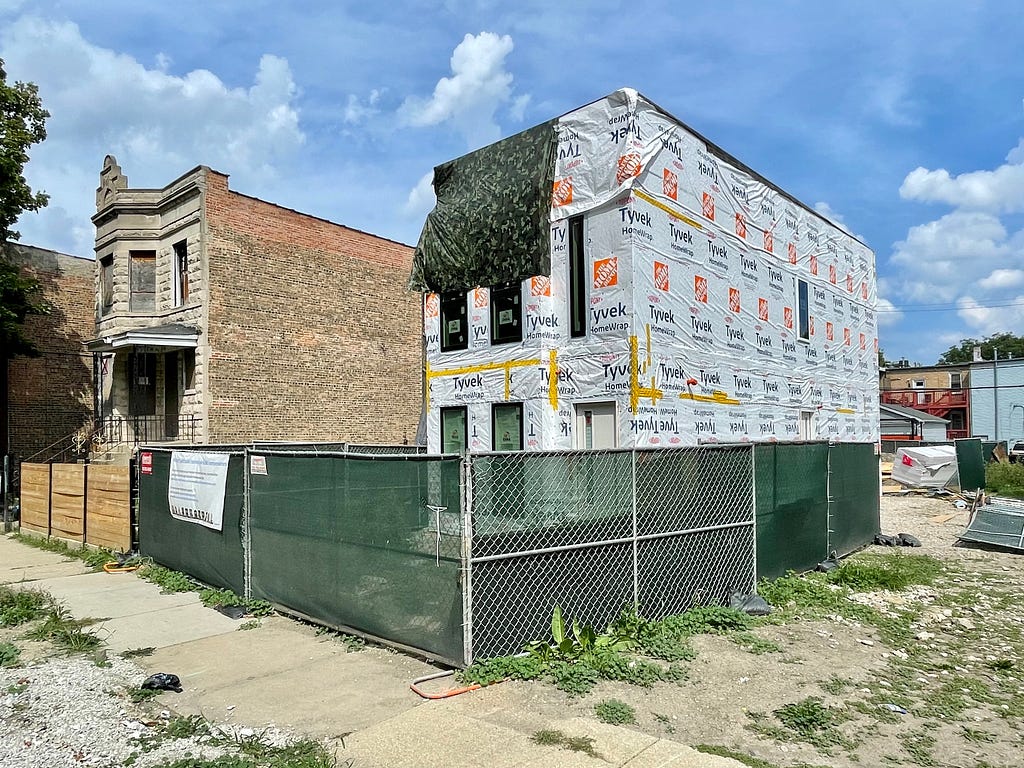
When you get there, look to the south at the second detached house Inherent Homes has installed, at 639 N Lawndale Ave. That house — delivered and stacked on a prebuilt foundation earlier this week, and shown in the video below — will be prepped and ready for showings in February.
Inherent Homes is the second modular house manufacturer in Chicago. Kinexx installed its first house in 2020 in Back of the Yards.
I get a little gleeful saying that in Chicago we have two local housing manufacturers, both designing and selling a high-efficiency and all-electric home for low and moderate income households.
Tim Swanson founded Inherent Homes in 2020, after using “community focus groups through 2019 to identify community needs and design solutions that reduce total cost of ownership and focus on generational wealth creation”. Prior to this, Tim led the modular construction division of Skender, which shut down in 2020.
Tim said the company is “focused on building trade careers that can matriculate to unions, creation of community general contracting companies and community developers. If we have two central tenets, it is to build wealth through business and career creation and homeownership.”
Chicago-based journalist Anjulie Rao interviewed Tim for Architect Magazine and further explained his approach.
..through Inherent Homes, Swanson is attempting to build up local labor economies by manufacturing affordable housing. The approach is perhaps a different way of thinking about housing beyond tired NIMBY/YIMBY binaries and supply skepticism; to imagine innovative housing construction methods as a means to develop strong labor forces and small businesses, as well as homeownership for those typically locked out of wealth-building.
The houses that Inherent Homes is building are being sold directly to their future owner-occupants while Kinexx is currently selling directly to developers. Later, Inherent Homes will also be delivering to community-based organizations and has agreements with groups who control their own land in East Garfield Park, North Lawndale, Roseland, Austin, South Shore, Woodlawn, and Pullman. (The City of Chicago provided land it owns for the first batch of houses in Humboldt Park.)
The buyers of Inherent Homes will also receive a novel collection of support services for five years, which Tim says is an industry first. This includes: life insurance and disability insurance because the loss of an income earner is a primary foreclosure cause; a limited warranty; a security system; and quarterly maintenance support.
The house — with the support services and smart home components — is listed for $349,900 (check the listing on Redfin). The price is aimed to be attainable to a household earning 140 percent of the area median income (for a family of three this means a salary of $131,320). Up to $41,000 in downpayment assistance is available to eligible buyers, including funds from the City of Chicago and the Illinois Housing Development Authority.
https://medium.com/media/a36d4b9639293768893773c40d17337c/hrefLooking inside
I visited the house during the January 14 open house, where I also met Sonia S. Del Real, vice president of sales and economic development. (Sonia is also a co-founder of Latino Real Estate Investors Council, or LREIC, and is participating in one of Chicago Cityscape’s sponsored membership programs.)
Sonia said that between the open houses, she’s been showing the house twice a week. There was one offer in December.
After I walked through the house, both Sonia and Inherent Homes’s production manager Christina Banks asked me what I thought. I don’t remember exactly what I told them, but I can say that it’s pretty nice.
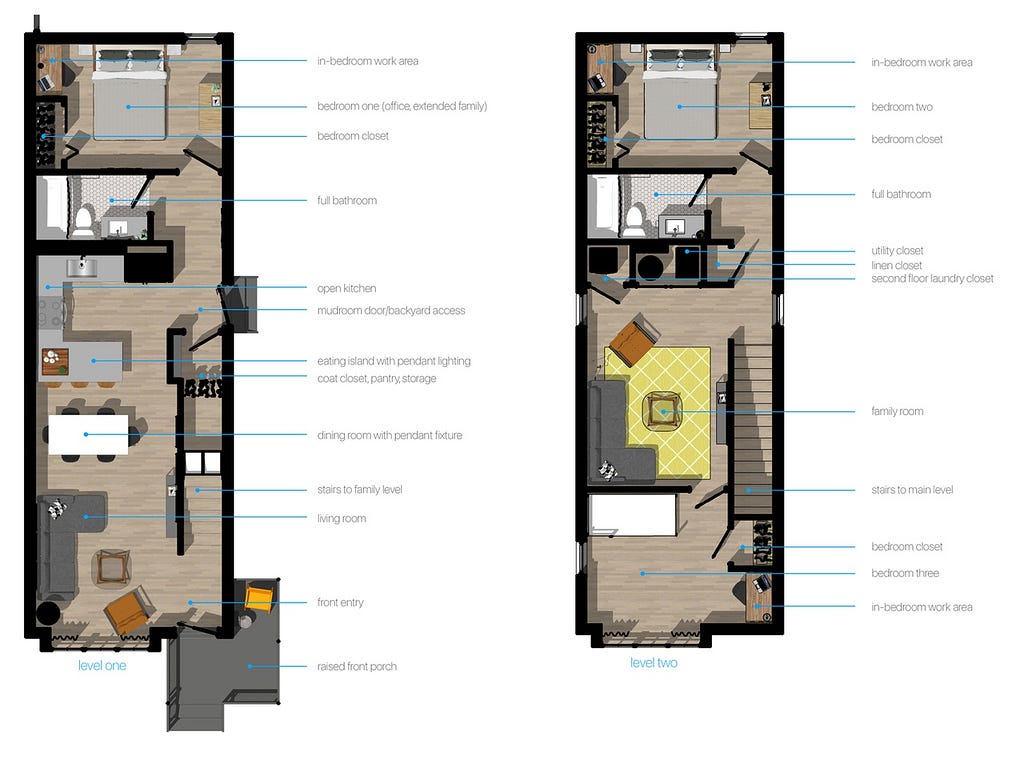
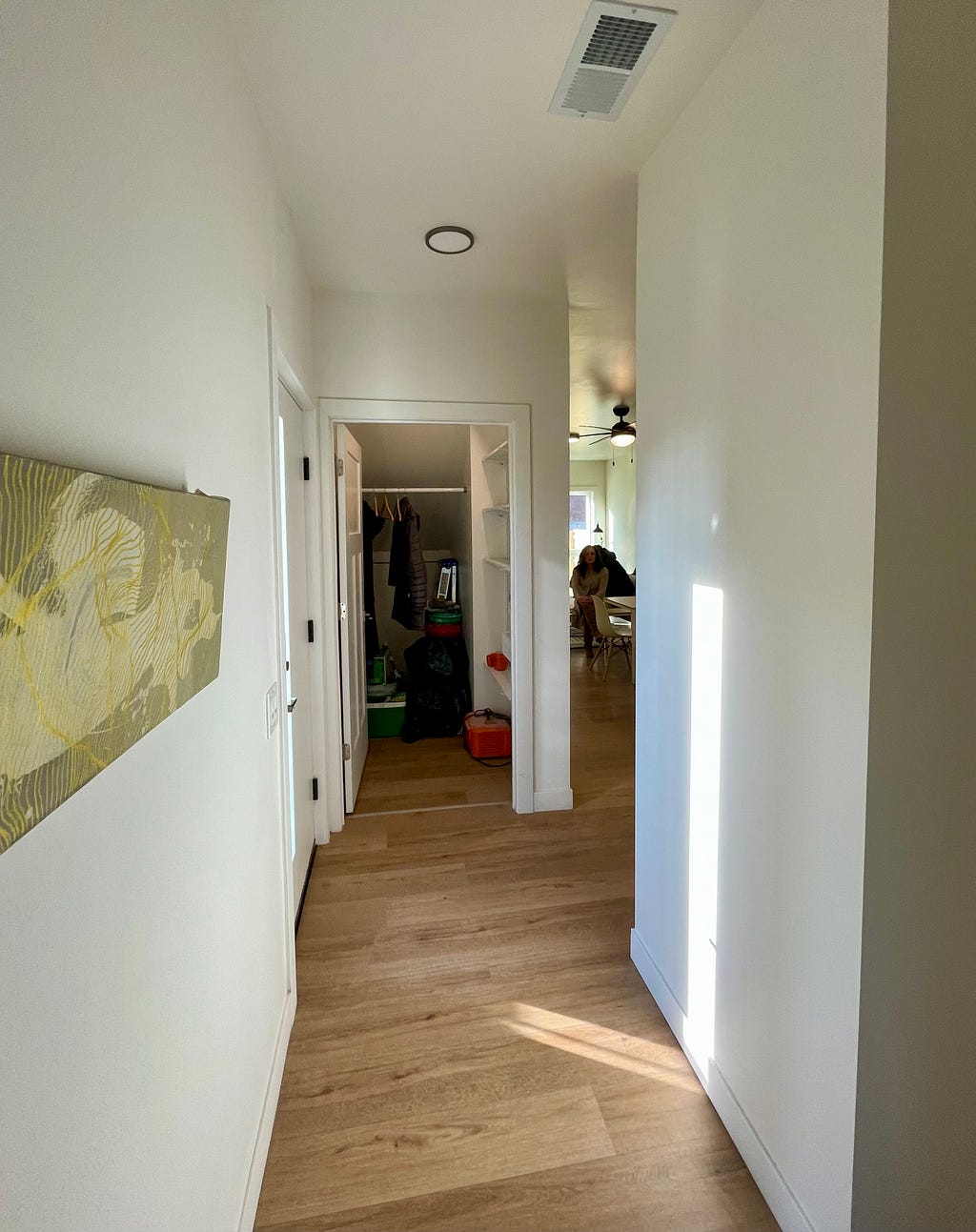

I like the layout — the living room and kitchen share an open floor plan, and there’s a family room upstairs. Unusual for Chicago houses, there is no rear entrance; instead, there’s a second entry on the side, that connects the kitchen to the walkway to the rear concrete pad. There is also a pantry and two storage closets.
One bedroom is on the first floor, separated from the kitchen by a bathroom and a short corridor — I presume that this will help noise from the kitchen and living room out of the bedroom. The other bedrooms are in the front and rear of the second floor.
Check out the appliances
Open the closet in the upstairs living room and you’ll find an electric hybrid heat pump water heater (that’s a mouthful), the air handler that connects to the electric heat pump’s outdoor unit, a whole house air filter, and a heat recovery ventilator. What does all of that mean?
A hybrid heat pump water heat extracts heat from the ambient air around the appliance and uses that to heater water. It’s supplemented by electric resistance elements to either speed up the process or heat the water to a higher temperature.
The outdoor heat pump works similar to the water heater and extracts heat from the outdoor air and applies it to a refrigerant that is sent to the indoor air handler where there’s a fan to push the air around the house. There are intake ducts in the house that return air to the heat recovery ventilator.
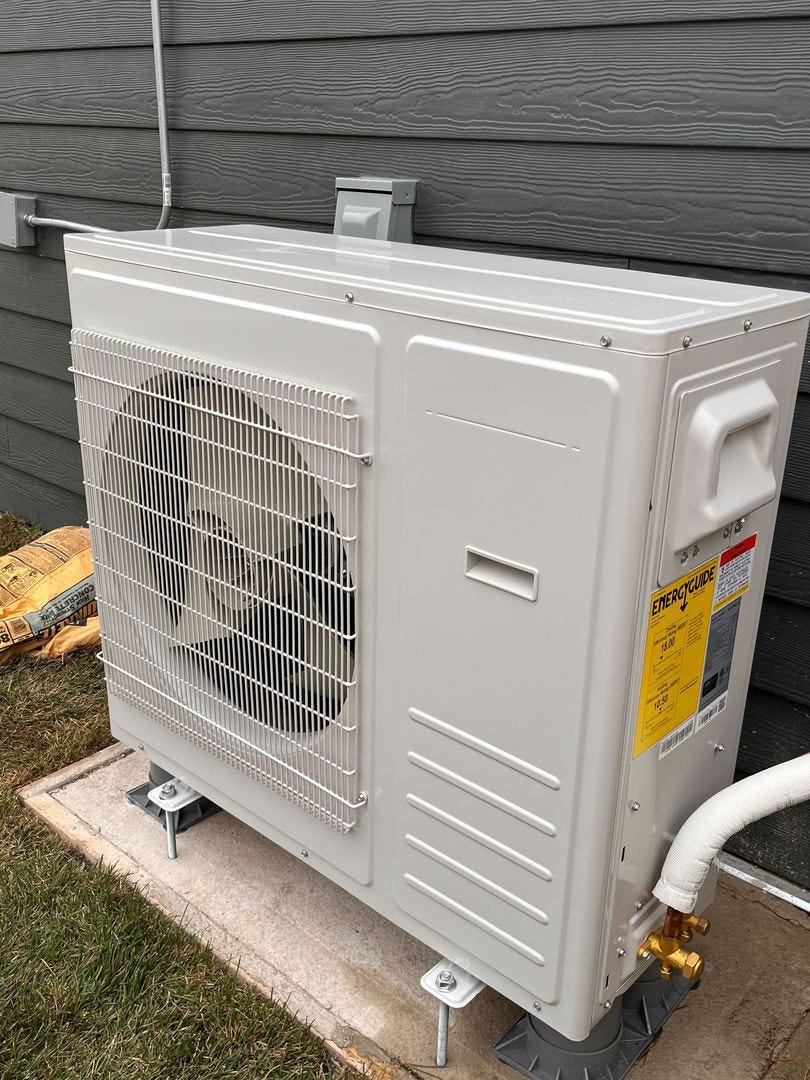

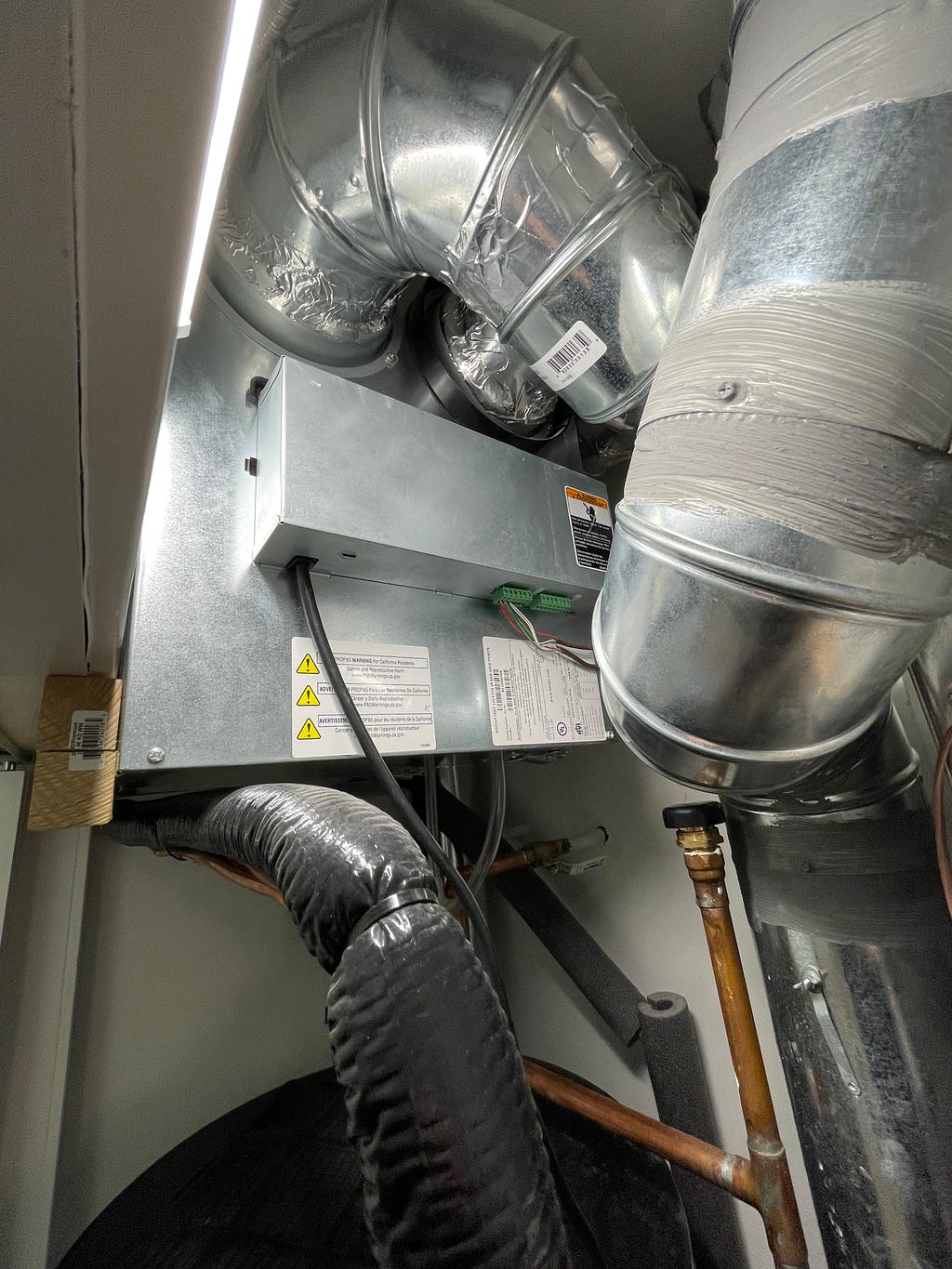
In the winter, the HRV transfers heat from this exhaust air to fresh air from outside to minimize the energy that the heat pump and air handler need to raise the temperature of the fresh air to what was set on the thermostat. In the summer, the HRV transfers the coolness of outgoing air to the hot fresh air to again reduce the energy demand to bring the temperature down. (Read about the important of ventilation and how HRVs work.)
In the middle of this heating and cooling operation is a UV and particle filter ensuring a good indoor air quality. Combined with a well-insulated exterior wall and special attention paid to sealing the building’s “envelope” well, annual heating and cooling costs will likely be lower in this house than others in the neighborhood.
Converting your own home
This is the future of housing, and for the next 10 years it’s on sale for renovations and new construction. The Inflation Reduction Act provides large tax credits through 2032 for swapping out appliances for their electric twin, or building new construction with these appliances (a tax credit means money back after you file a tax return, but the State of Illinois has the option to create a system to provide the money as instant rebates instead). Find info about the IRA and ComEd rebates on Chicago Cityscape.
This year, new building code standards went into effect in Chicago that requires all new construction housing to either be all-electric or, if fossil fuels are used, provide an electrical infrastructure for an eventual swap. A new ordinance that may be introduced at next week’s City Council meeting would not allow the gas option unless it can be done without emissions.
Chicago’s modular, electric house industry welcomes Inherent Homes was originally published in Chicago Cityscape’s Blog on Medium, where people are continuing the conversation by highlighting and responding to this story.
Other posts by Steven Vance full archive