City Council members have their own affordable housing proposals

Published on Jul. 18, 2018 by Steven Vance


In addition to Mayor Emanuel’s proposed initiatives, several alders have proposed three of their own ordinances affecting affordable housing and residential development requirements.

More flexibility in two of the three ARO pilot areas
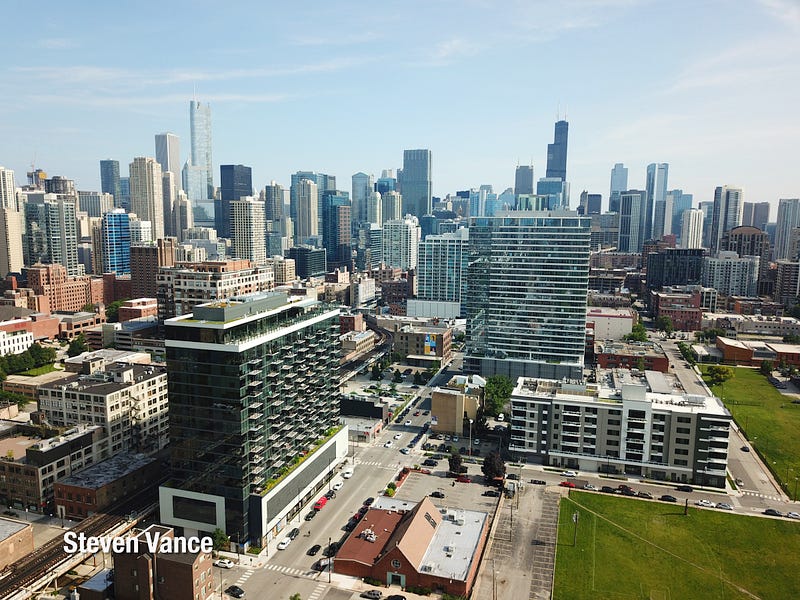
New housing developments in the Near North ARO Pilot Area have to provide a greater number of on-site affordable residences than prior to the the new rules. An ordinance introduced in June would give the commissioner more flexibility to change those rules for each development.

An ordinance was proposed by three alders to change the Near North and Near West pilot areas to give the Planning department commissioner more authority, in consultation with the respective alder, to approve a variation of the ARO pilot, “including modifications to the number and size of required affordable units, provided that the commissioner finds that the proposed alternative mode of compliance would result in greater benefits, including larqer affordable units or greater affordability levels, than would otherwise result from the strict application of the otherwise applicable reguirements.” (ordinance O2018–4089)

Use Chicago Cityscape’s Address Snapshot reports to look up if a property you own or plan to own is in one of the ARO pilot areas. The report will also tell you what the affordable unit in-lieu fee will be for units that you don’t build on site.


The three pilot areas — Milwaukee Corridor is not part of this revision ordinance — were adopted last year to generate more affordable housing by increasing the number of units in each new development, and to require at least some to be built on-site.

Sponsoring alders:

Sweeping (and complex) changes to the ARO

Some of the proposed changes to the Affordable Requirements Ordinance in O2018–5102, called the “Development for All” ordinance, include:

  • Increase the minimum number of units that have to be set aside as affordable from 10 percent to 30, 40, or 50 percent, depending on the income area (which can you see when you look up an address on Chicago Cityscape) and the type of benefit (zoning change, city-owned land sale, or financial assistance or TIF funds)
  • Change the income thresholds: 25 percent of the affordable units are restricted to households earning 0–30 percent of Area Median Income; 50 percent of the affordable units are restricted to households earning 31–50 percent of AMI, and the remaining 25 percent of the affordable units are restricted to households earning 51–80 percent AMI. (The current standard is 60 percent of AMI.)
  • Income thresholds for TIF-funded projects: 25 percent of the affordable units are restricted to households earning 0–15 percent of Area Median Income; 50 percent of the affordable units are restricted to households earning 16–30 percent of AMI, and the remaining 25 percent of the affordable units are restricted to households earning 31–50 percent AMI. (The current standard is half of the units must be for households earning up to 50 percent of AMI, and the other half is for 60 percent AMI.)
  • For the first time, smaller buildings would be affected. Buildings with 3–9 units that receive a zoning change or city funding assistance would have to set aside at least one unit as affordable, and two units in the downtown area (the current code only applies to buildings with 10 or more units)
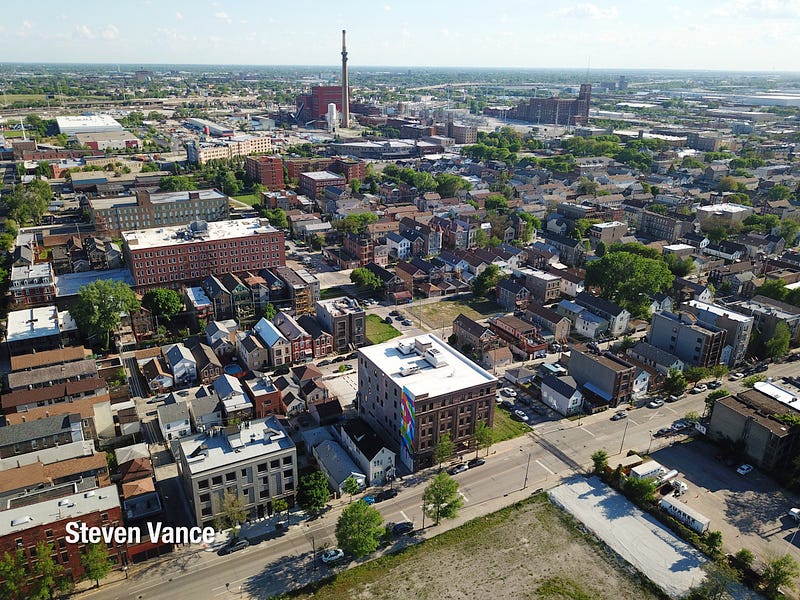
A proposed change to the Chicago Affordable Requirements Ordinance (ARO), would, for the first time, require that new buildings with 3–9 units provide at least one affordable unit. Many 3–9 unit buildings have been built in Pilsen, seen here.
  • The portion of affordable units that have to be built on-site would increase from 25 percent to 30 percent in low-moderate and higher income areas, and to 40 percent in the downtown area
  • The bedroom mix of the on-site affordable units is specified: 60 percent must be 2+ bedrooms, and 30 percent must be 3+ bedrooms
  • Develop an affordable housing search website that shows people where all of the units created by the ARO are located

Alders sponsoring the ARO revisions:

Automatic approval of certain Planned Developments

I reported three weeks ago that there was an ordinance introduced that would automatically approve otherwise compliant Planned Development proposals if they met their resiential affordability requirements and were in a ward that had fewer than 10 percent affordable units.

Sponsoring alders:

Greater transparency at the CHA

In the same ordinance as the one above, called Chicago Homes for All (O2018–5099), there is a proposal to regulate more of the Chicago Housing Authority’s job to provide public and affordable housing.

  • The ordinance would require the CHA to report to the City Council’s Committee on Housing and Real Estate every quarter.
  • CHA would have to update its website to show which position people are in on the waitlist for CHA-supported housing.
  • The CHA must replace all public housing units one-for-one in redevelopment projects. This would include a project like Lathrop Homes if that would have been redeveloped after the ordinance’s adoption. This may end up affecting part of the upcoming Southbridge redevelopment of the former Harold L. Ickes Homes. It would likely affect all of the future Cabrini-Green area redevelopment.
  • Twenty percent of the replaced units must be in “opportunity communities”, which is a ward “where less than 10% of the ward’s housing stock is provided as dedicated affordable housing”.
  • The Department of Planning & Development would have to approve CHA’s redevelopment plans.

Sponsoring alders: This is the same ordinance discussed in the previous paragraph.


← Older article
Emanuel’s nine recent affordable housing initiatives
Newer article →
This is the first I’ve heard of the TaxSmart program!

Other posts by Steven Vance full archive

March 2026
February 2026
January 2026
December 2025
November 2025
September 2025
August 2025
July 2025
June 2025
April 2025