Has the Mayor proposed a competing anti-gentrification regulation for Logan Square?

Published on Aug. 31, 2017 by Steven Vance


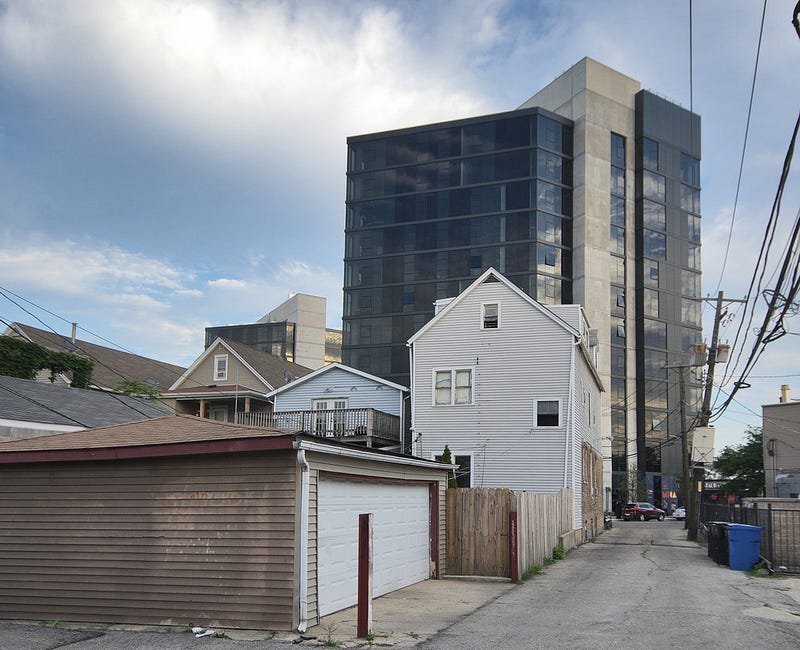
The MiCa buildings by the California Blue Line station stand above older housing in Logan Square. The buildings have the full 10% required affordable units on-site, per Alder Moreno’s ward rule. Photo: Gabriel X. Michael

Mayor Emanuel will propose a modification to the city’s Affordable Requirements Ordinance (ARO) next week that will require developers to create more affordable dwelling units in three gentrifying “pilot” zones.

I’m only going to discuss the Milwaukee Avenue Corridor zone. The press release from Friday, August 25, describes this as an area covering nine square miles and encompassing parts of Avondale, Logan Square, and West Town. No maps have been published.

The proposed changes to the ARO in the Milwaukee zones are different than in the Near North and Near West zones. The pilot would last for three years. Alders Joe Moreno (1st) and Walter Burnett (27th) are initial cosponsors.

In the Milwaukee zone, the number of units required to be “affordable” if a property receives a zoning change increases from 10 percent to 15 percent (if any units are built on-site), and to 20 percent (if any units are built off-site). If a project receives TIF assistance, the floor is already 20 percent.

More importantly, developers wouldn’t be able to pay the in-lieu or “buyout” fee, which is often what happens because it’s cheaper than subsidizing rents for apartments or lower condo prices. Moreno has a rule, though, banning the buyout.

The proposed ordinance also changes who’s eligible to live in the designated “affordable” units in a new development. The current standard is that “affordable” units are available to rent by people in households earning up to 60 percent of the Area Median Income. The new standard in the Milwaukee zone would be 80 percent.

👋🏽 We’ve been busy putting up new features this month: start a free trial instantly without a credit card 💳; architects can upload renderings of their projects; mapping 🏠 building permits in Naperville; and organizing your searches and research.


Competing proposals

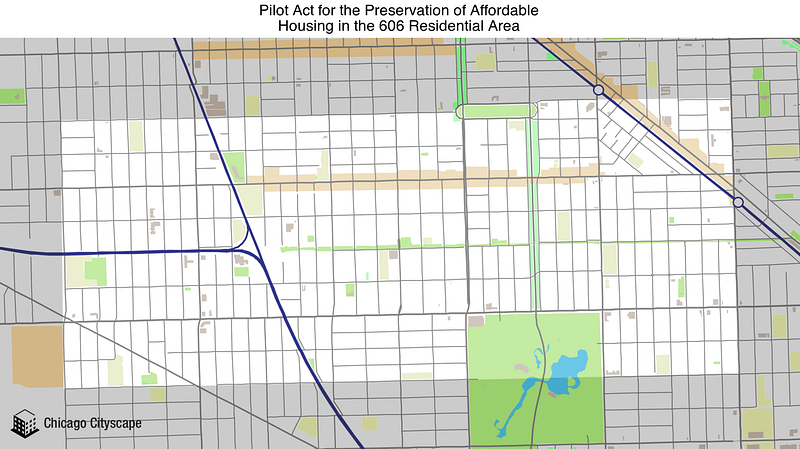
It’s highly likely that the Milwaukee zone overlaps with the proposed “Pilot Act for the Preservation of Affordable Housing in the 606 Residential Area” (view map) which increases demolition fees, and creates new teardown and development fees for developments without a very high ratio of affordable housing, that was introduced to City Council in May. (Read our explainer.)

Alder Carlos Ramirez-Rosa (35th), a 606 pilot act cosponsor, was displeased, to say the least. (Note that Alder Moreno is also a cosponsor of the 606 pilot act, which hasn’t been on a committee agenda since its introduction.)

Mina Bloom reported on the story in DNAinfo on Monday, August 28, and interviewed Rosa, who said the proposal was “a joke and a handout to developers.” I don’t understand how it’s a buyout, because the proposal increases requirements for developers and eliminates a kind of loophole.

But Rosa had more sustained criticisms, Bloom wrote: “Ramirez-Rosa said he first learned of the program a couple of weeks at a meeting with city officials. He said officials told him that the city has been working on the program for about two years without input from him or community groups.”

Developers quickly weighed in

A day later, on Tuesday, Bisnow Chicago hosted a panel of developers at its fifth annual construction and development event.

Bisnow editor Chuck Sudo recapped the event, writing, “Marquette Cos. CEO Nick Ryan said it is hard enough already to get a development approved in the city. Between affordable housing allotments, which cost a developer 10% of a project’s value immediately, dealing with aldermen and community groups and challenges from labor shortages, developers are limiting their projects to the very best ones they believe can be realized.”

“[Bond Cos. President Rob] Bond said the way the city is dictating how affordable housing should be built is counterproductive, as that would limit the number of developers who can make their projects’ balance sheets work.”

The alternatives, according to the panelists?

  • “an affordable housing voucher program would level the playing field, let landlords command market-rate rents and allow people who want to live in market-rate housing to do so, without being branded as affordable housing recipients”
  • “a voucher program could possibly be funded by more fees”
  • “tax incentives and abatements can also be used to better blend market rate and affordable renters”

There’s another problem with the existing ARO: The city process finding tenants is “problematic”, but Alan Schachtman of Clayco said he’s working with Alder Moreno to “optimize that process”.


← Older article
Great idea, Erik!
Newer article →
$100,000 is available to activate areas around seven CTA stations

Other posts by Steven Vance full archive

March 2026
February 2026
January 2026
December 2025
November 2025
September 2025
August 2025
July 2025
June 2025
April 2025