Chicago’s new housing commissioner, Marisa Novara, is talking to the press. Let’s read what she has to say about aldermanic privilege in this interview in Next City with Jared Brey. Then I’ll tell you what’s new on Cityscape.
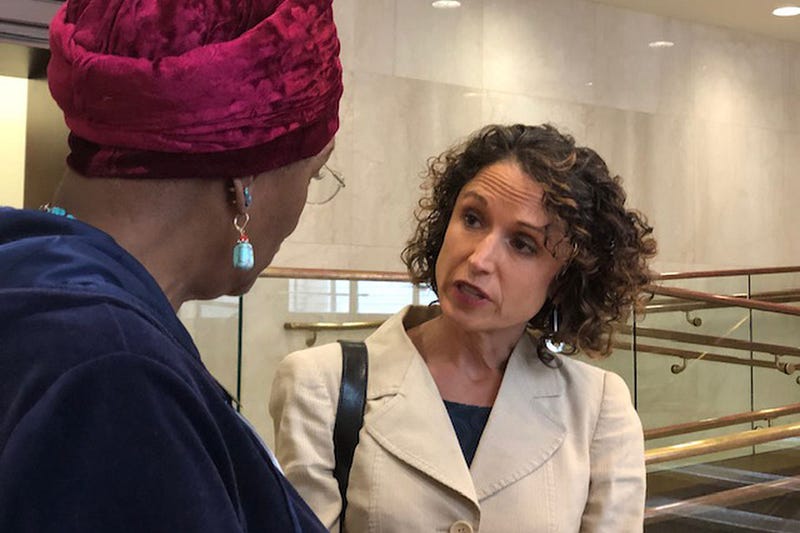
Novara’s confirmation hearing was on June 6, 2019, and she touched on many of the same topics in that hearing, speaking to the alders about affordable housing, as she did to Brey.
Her Next City interview
In Chicago there’s been a longstanding unwritten understanding about aldermanic prerogative that sort of exists on two different planes. One is that if there is a project that occurs in an Alderman’s ward, whichever stance that alderman takes, all 49 other aldermen go along with their position.
“How does [aldermanic privilege] exacerbate segregation?”
What we’ve seen play out in past years is that we have not had a vision for the city that says every community needs to contribute to the city’s affordable-housing needs. And lacking that as an overriding principle, we’ve allowed for 50 different decision-makers essentially about how that will play out in their ward, which has meant that for many it has meant it doesn’t play out at all in their ward. So we see parts of the city with lots of affordable housing and parts with next to none, which is not an equitable way to approach people having choices about where to live or to stay in their community if it’s getting less and less affordable.
Bingo!
Novara was appointed to become Department of Housing commissioner in part for her work in creating a groundbreaking report on the economic costs of past and sustained segregation in Chicagoland. But the outcome wasn’t to recommend ways to increase integration.
…ultimately what came through clear was that we should not be solving for integration, we should be solving for the root of segregation, which is racism.
And I learned something new about Novara: She attended a community education program run out of UIC called “Urban Developers Program”, “a very nuts-and-bolts kind of program to help people learn about affordable housing development”. I wish that was still going on.
Novara mentions Mayor Lightfoot’s executive order, issued on her first day of office on May 20. The order has been in the headlines as “ending” aldermanic privilege (although most headlines said “limit”), but it can only kinda do that. The order applies only to staff in the City departments, and says they cannot defer to an alder’s demand or suggestion in the course of doing administrative work. Alders can give input on processes like permitting and licensing, but they don’t have a veto — unless deferring to an alder is part of Chicago laws.
The zoning change process is encoded in law. Section 17-13-0300 in the Chicago zoning code dictates how zoning changes occur: After the zoning change application is filed with the Department of Planning & Development, the Chicago City Clerk introduces it to City Council, then the Committee on Zoning, Landmarks and Building Standards must hold a hearing on it, after which the City Council makes the final decision.
What’s new on Chicago Cityscape
Always something new. Don’t see something you need? Contact us.
Zoning
The Chicago zoning map has been updated to show the April 2019 zoning changes. There were no changes in May 2019 (because of the change in City Council), and we will update for June in a week.
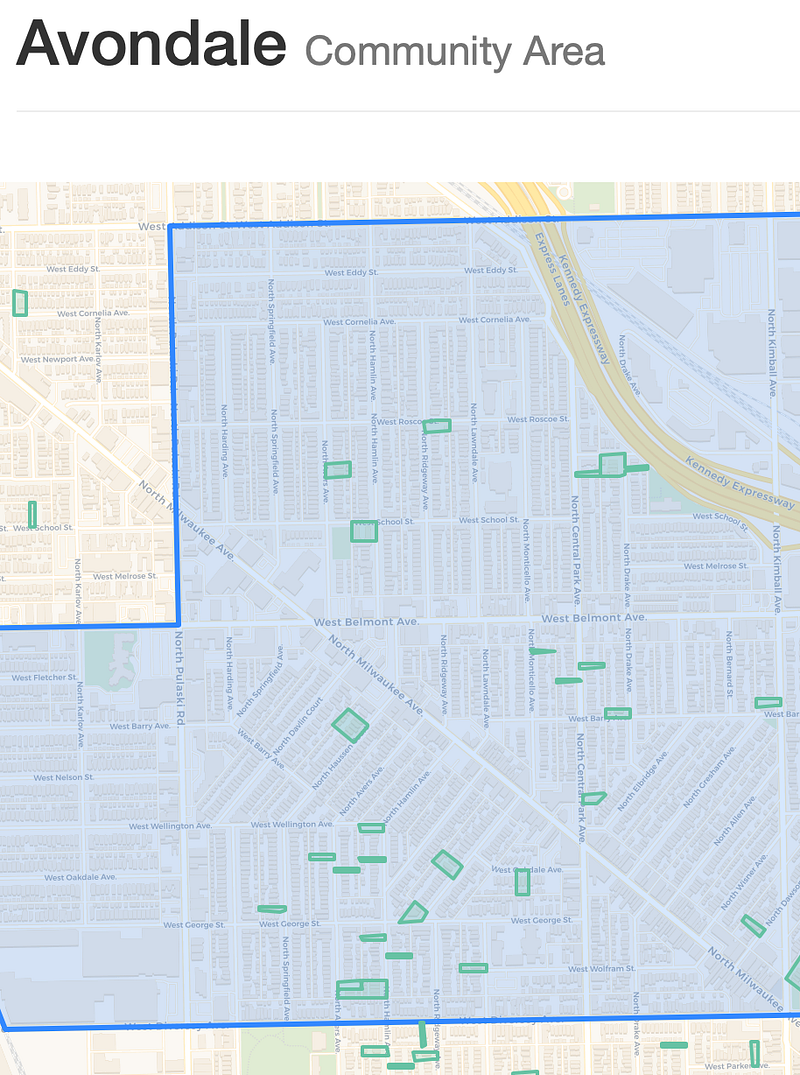
Brokers and developers can now filter the Chicago zoning map in any given Place for a specific zoning district. For example, as the map illustrates, you can show just the zoning districts in Avondale that are RT-4, which allows 2-6 units on a lot, depending on its size. (There are few lots in Avondale zoned to allow multi-family housing, given the rampant downzoning.)
Properties
The process of adding the 2018 property tax data started last weekend and will continue for another week.
Once that’s done, the Address Snapshot reports will be the first part of Cityscape to get updated, showing the property tax and assessment history going back to 2009 for any given property in Cook County. Then, other pages, like Property Finder, will get updated.
Transit
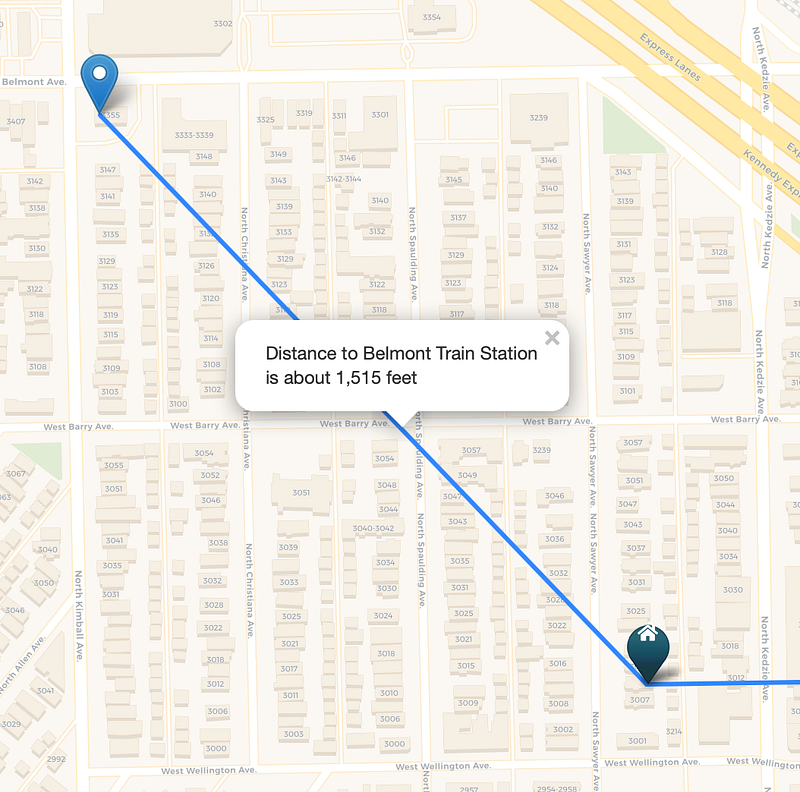
Looking up a Chicago property’s eligibility for the “Transit-Served Location” rule (an ordinance to allow for transit-oriented developments, or TOD) is a lot easier because we’ve improved how it displays visually.
Miscellaneous
Book recommendations. Want to learn some Chicago history, whether it’s about urban planning, riots, a specific neighborhood, or contract buying? We have a new crowdsourced virtual book library. Suggest a book!
Want to see where we get our data? We’re documenting sources publicly (in the GIS and other data-oriented worlds, this is called a data dictionary”).