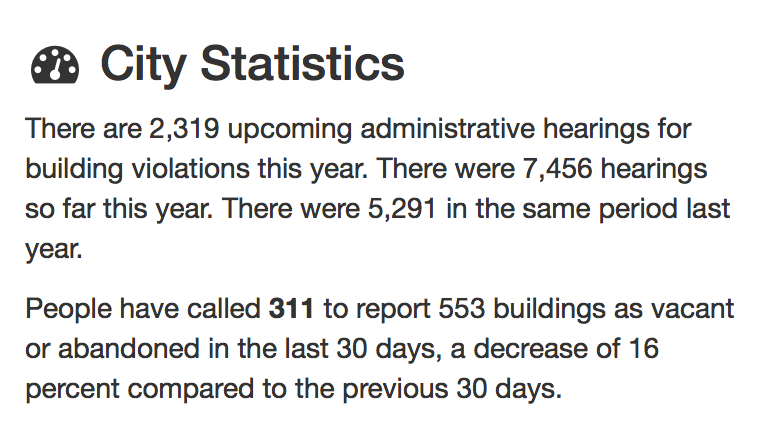
I love devising new ways to link datasets on the city’s data portal together. It’s what made Chicago Cityscape happen two and a half years ago, when I combined the existing dataset of licensed contractors (which was being scraped, because it’s not open) with the building permits dataset (which is on the city’s open data portal).
Merging two recently integrated datasets together creates a cool, new result: A map of building people have reported vacant or abandoned and whose owners are set to have their building violations citations heard soon.
The city’s IT department added a new dataset in August for Building Violations Hearings. These are cases where the city issues citations to building owners for violations on their property and sets a hearing date at the Chicago Department of Administrative Hearings because the owner didn’t resolve their violations.
I’m working with someone, and I will soon be working with a group he’s part of, who want to tackle the vacant and abandoned building problem in their neighborhood. Thus a new map on Chicago Cityscape was born, again using an open data set from the city’s portal.
Every day people call 311 to report that a building is vacant or abandoned. Oftentimes the same building is reported more than once (by an unknown number of callers). That data is now mapped on the site.
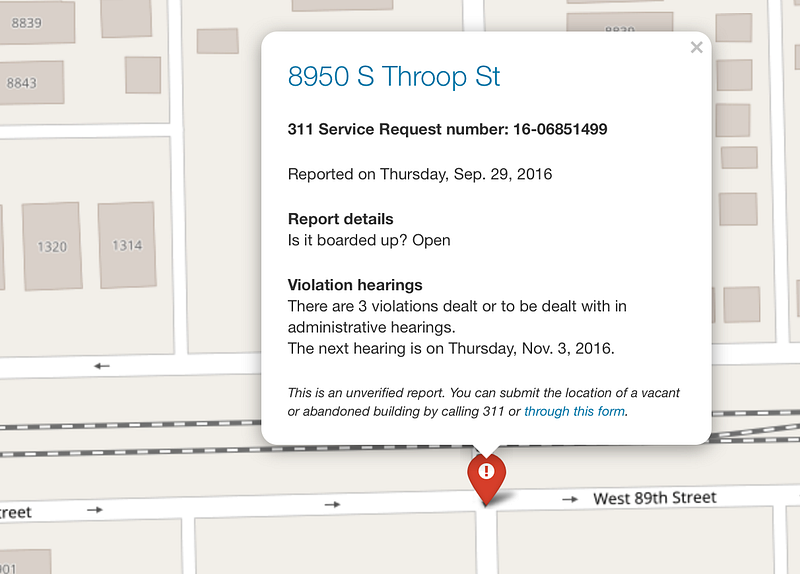
The Building Violations Hearings dataset and the 311 calls about vacant or abandoned buildings have their address field in common. And they each have date fields: when the call was made, when the hearing is scheduled. It’s a quick database query to merge the two datasets together and show off a map of buildings reported vacant or abandoned that the city has taken notice of and is taking the owners to administrative hearings.
Change a filter on the map to see them.